
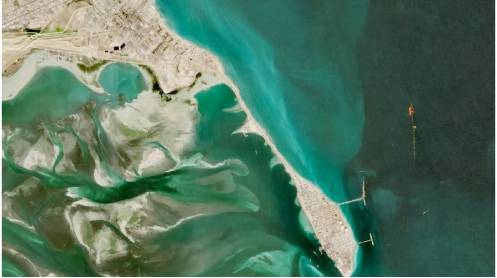
RIYADH: Commercial satellite imagery has revealed damage to a key processing unit at Saudi Arabia’s Ras Tanura refinery complex following a Houthi missile strike, raising concerns over global supplies of refined petroleum products.
Thank you for reading this post, don't forget to subscribe!The damaged facility appears to be a cracking unit, according to open-source intelligence analysts. The apparent cessation of flaring at the refinery suggests that operations may have been suspended or curtailed, although the extent of the disruption has not been independently confirmed.
Ras Tanura has a processing capacity of up to 550,000 barrels per day, making it one of Saudi Arabia’s largest refineries. Any prolonged shutdown could reduce supplies of diesel, jet fuel, gasoline and bunker fuel at a time when global markets are already facing tight supplies.
Despite the damage, Saudi Arabia’s crude oil exports have reportedly continued. Satellite imagery captured nine very large crude carriers loading simultaneously at Ras Tanura and Juaymah, with a combined capacity of approximately 18 million barrels, according to Bloomberg commentator Javier Blas.
Blas said Saudi Aramco had restored its crude oil export volumes to pre-conflict levels and had nearly recovered its refined product exports.
Meanwhile, an Associated Press investigation has reported evidence suggesting that Russian satellite intelligence may have supported Houthi attacks on Saudi energy infrastructure. Swiss geospatial consultancy Aurorah Geosignal Intelligence reportedly identified a close correlation between Russian government satellite movements over Saudi sites and subsequent Houthi missile strikes, including an attack on October 19.
According to the AP, Houthi and Saudi officials said the group had access to Russian satellite intelligence products, with Iranian military advisers in Yemen providing imagery and analytical support. The officials also alleged that the Houthis had access to Chinese satellite imagery.
The reported damage highlights the vulnerability of critical energy infrastructure to regional conflict and the potential consequences for international fuel markets. The duration of any disruption at Ras Tanura will be a key factor in determining its impact on refined petroleum supplies.