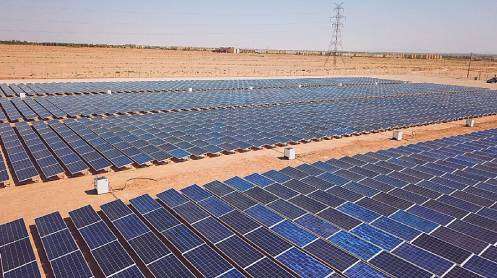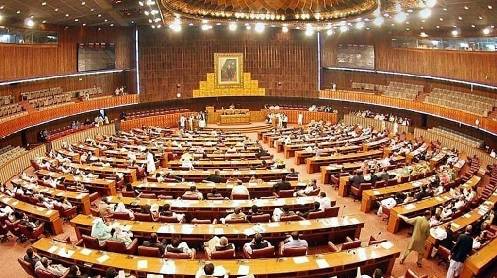
ISLAMABAD: Pakistan is accelerating its transition toward clean energy, with the government reaffirming its target to raise the renewable share in the national grid to 40% by 2025 and 60% by 2030, the National Assembly was told on Friday.
In a written reply, Federal Minister for Energy (Power Division) Awais Leghari said the country has already surpassed its 2025 goal, with renewables accounting for over 46% of Pakistan’s power generation mix as of September 2025. While on-grid renewable capacity currently stands at 37%, it is expected to increase significantly as new public and private sector projects come online.
Leghari noted that 60 private-sector renewable projects developed under the Private Power and Infrastructure Board (PPIB) are contributing 4,753 megawatts (MW) to the national grid. These include 680 MW of solar, 1,937 MW of run-of-river hydropower, 1,845 MW of wind energy and 291 MW of bagasse-based cogeneration.
Public-sector contributions are also rising, with 9,619 MW of hydropower capacity and 100 MW of solar generation from K-Electric adding to the national mix. “Pakistan’s clean energy share has exceeded 46%, achieving our 2025 renewable energy target years ahead of schedule,” Leghari said, crediting supportive government policies for driving the transition.
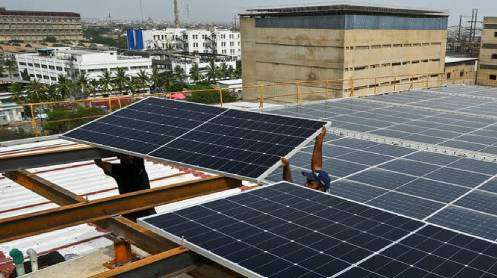
He added that solar adoption at the residential, commercial and industrial levels is being actively encouraged. Net-metering regulations — allowing consumers to generate and supply solar or wind power to the grid — remain a key pillar in expanding clean energy consumption nationwide.
Circular Debt Sees Sharp Reduction
The minister also highlighted improvements in the power sector’s financial health, pointing to a Rs780 billion reduction in circular debt within a year. Circular debt, which stood at Rs2,393 billion on June 30, 2024, had fallen to Rs1,614 billion by June 30, 2025.
Leghari attributed the improvement to renegotiated agreements with power producers to lower late-payment charges and to better performance across distribution companies (DISCOs). “Our goal is not just to boost renewable capacity, but also to build a sustainable and efficient energy system,” he added.
Pakistan Post Faces International Mail Suspension
Separately, the National Assembly was briefed on Pakistan Post’s challenges after Russia suspended all international mail services to Pakistan due to unpaid dues amounting to Rs55 million. The suspension, notified by Russian Post in August 2025, has disrupted postal exchanges between the two countries.
Federal Minister for Communication Aleem Khan said Pakistan Post’s financial difficulties extend beyond Russia, with outstanding international liabilities exceeding Rs310 million as of November 2021. He said efforts are underway to clear dues, pending the release of funds by the Finance Division.
“This suspension has caused serious inconvenience for individuals, businesses and educational institutions dependent on international mail services. Restoring services with Russia is our top priority,” he added.
Story by Zulfiqar Ahmad | Naveed Butt