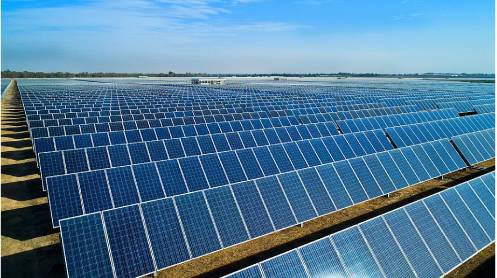
KARACHI: Pakistan’s citizen-led solar energy surge is delivering significant economic, social and environmental benefits, according to a new study titled “The Many Dividends of Solar Rush in Pakistan.” The study highlights that large-scale adoption of solar photovoltaic (PV) systems is reducing reliance on fossil fuels, easing pressure on the national grid, mobilising private investment, creating jobs and cutting carbon emissions at scale.
Launched on Friday by Renewables First, the study notes that distributed solar has emerged as one of Pakistan’s most effective climate mitigation tools, particularly as the country faces escalating climate risks, including recurrent and devastating monsoon floods.
In FY25 alone, solar PV is estimated to have avoided around 35 million metric tons of carbon dioxide equivalent (CO₂e), taking cumulative avoided emissions since FY17 to more than 83 million metric tons. At the current pace, Pakistan could avoid up to 50 million metric tons of CO₂ annually by FY30—exceeding the total emissions currently generated by the country’s entire power sector.
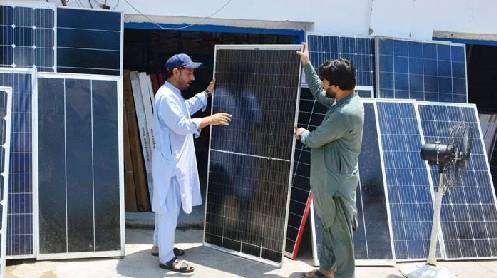
The report also underscores Pakistan’s rapid rise as a global solar market, with the country becoming the second-largest importer of Chinese solar panels in FY25. Imports reached 17.9 gigawatts (GW) during the year, pushing cumulative imports beyond 50 GW. Households, farms and industries are increasingly turning to solar as a financially viable alternative amid soaring grid electricity tariffs and high costs of imported fuels.
“Amid Pakistan’s economic and employment challenges, the country’s solar rush is delivering clear cross-sector dividends—from reduced thermal power dependence to new economic activity and job creation,” said Muhammad Sheraz, Energy Analyst at Renewables First. He added that these developments are not only transforming the energy landscape but also laying the groundwork for long-term economic growth.