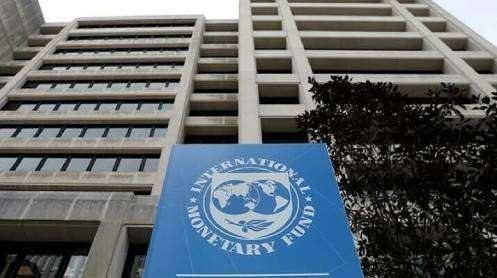
ISLAMABAD: The government has initiated high-level discussions to formulate a credible and sustainable strategy to permanently exit the International Monetary Fund (IMF) after the expiry of the ongoing $7 billion bailout programme in September 2027, highlighting the need for urgent and coordinated national reforms to avoid future dependence on IMF support.
Government sources told The Express Tribune that a senior-level meeting was recently held to assess whether Pakistan could sustain economic stability without the IMF’s backing once the current programme concludes. The discussions focused on building sufficient foreign exchange buffers, strengthening exports and implementing deep-rooted structural reforms.
According to an assessment by the Planning Commission, Pakistan risks entering another IMF programme unless it urgently enhances foreign exchange reserves and develops complete value chains to boost exports. Minister for Planning Ahsan Iqbal said the commission had recommended making the current programme the last one, provided Pakistan commits to achieving $63 billion in exports by 2029. “Otherwise, we will continue to face an external sector gap,” he said.
Officials noted that as Pakistan transitions from economic stabilisation to growth, the current account deficit could temporarily rise to below 2% of GDP, exceeding $10 billion annually. This would require additional external financing of about $4 billion in 2027-28, $5.5 billion in 2028-29 and $3 billion in 2029-30.
The Planning Commission’s assessment suggests that Pakistan could manage projected external financing needs of over $12 billion during 2028-30 without IMF assistance, subject to the swift implementation of comprehensive reforms. Overall gross financing requirements during 2028-31 could exceed $12 billion, to be met through an additional $4 billion in exports, $4 billion in remittances, $3 billion in new foreign direct investment and savings through agriculture import substitution.
The assessment warned that Pakistan remains vulnerable due to weak fiscal and external buffers and high financing pressures. It emphasised the need for whole-of-government ownership of reforms and recommended exploring the conversion of about $14 billion in short-term bilateral loans into long-term financing to ease external repayment pressures.
The Ministry of Finance did not respond to queries on whether it endorsed the Planning Commission’s assessment of financing needs or the proposal to restructure short-term loans.
Debate on long-term economic stability has intensified following recent remarks by the State Bank of Pakistan (SBP) and the Special Investment Facilitation Council (SIFC), which questioned the effectiveness of existing growth models and highlighted the country’s continued reliance on the IMF and other international creditors.
To address these challenges, the Planning Commission has proposed a three-phase reform and implementation plan. The first phase, running through 2027, focuses on fiscal management, energy sector reforms, governance, human resource development and export alignment. The second phase (2029-32) aims to accelerate investment-led growth through industrialisation, export expansion, technological adoption and agricultural modernisation. The third phase envisions a strategic shift towards high-quality, technology-driven economic growth.
The commission believes its 10-year “Uraan Pakistan” plan could help keep inflation low, sustain economic growth above 6% and significantly enhance exports to rebuild external buffers. However, the plan has faced criticism for lacking practical implementation mechanisms, despite its ambition to turn Pakistan into a $1 trillion economy by 2035.
Sources said Prime Minister Shehbaz Sharif has directed the Planning Commission to develop a results-based strategy to translate long-term plans into tangible outcomes and permanently end reliance on IMF programmes.
The internal assessment also highlighted declining public and private investment, weak alignment between investment and strategic planning, and slowing economic growth, which has averaged 3.9% since 2000 compared to around 6% in regional peers. Unemployment has risen to nearly 6 million by 2024-25, while Pakistan ranks 168th out of 193 countries on the Human Development Index.
It further noted widening regional disparities, low investment levels of about 14% of GDP—well below the 20% required for sustainable growth—and sluggish export performance. Pakistan’s exports have increased only 4.1 times this century, compared to a 26-fold increase in Vietnam over the past 24 years.
The assessment called for rationalising high tax rates, improving governance to plug fiscal leakages, and shifting investment towards industry and services to enhance productivity, exports and long-term external sustainability.
Story by Shahbaz Rana