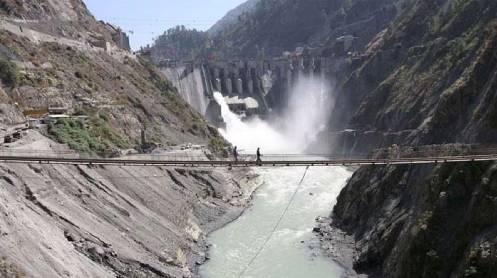
ISLAMABAD / LAHORE: Pakistan on Friday sought a formal explanation from India over what it described as an “extraordinary reduction” in Chenab River flows earlier this month, alleging violations of the 1960 Indus Waters Treaty following the discharge and refilling of the Baglihar dam.
In a statement, the Ministry of Water Resources said Chenab flows had now stabilised after a period of abnormal volatility. It added that Pakistan’s Commissioner for Indus Waters had taken up the matter with his Indian counterpart through the Permanent Indus Commission, seeking detailed data on the sudden decline in river flows.
According to the ministry, hydrological records for the first half of December 2025 showed that between December 10 and 16, flows dropped sharply, with the lowest reading at just 870 cusecs — far below the historical 10-year minimum range of 4,018 to 4,406 cusecs for the same period.
Satellite imagery reviewed by Pakistani authorities showed a marked reduction in the surface area of the Baglihar reservoir on December 8, followed by an increase by December 13. This pattern, the ministry said, indicated that India had emptied the reservoir and subsequently refilled it. Under the Indus Waters Treaty, India is not permitted to drain the dead storage of run-of-the-river hydropower projects on western rivers, it added.
The ministry reported a “positive shift” from December 17, when Chenab flows began rising steadily, reaching 6,399 cusecs by 7am that day — within the historical range for the first time since mid-month. Data from the Punjab Irrigation Department showed that by December 19, flows at Marala were fully within the 10-year historical range, with readings between 4,505 and 6,494 cusecs.
While Chenab flows have normalised, officials expressed concern over disruptions in the Jhelum River, alleging abrupt holding and release of water by Indian authorities. Senior irrigation officials said reduced inflows at Mangla Dam were alarming, warning that nearly 15 million acres of irrigated agricultural land could be affected by water shortages.
Internal reports showed Jhelum inflows at Mangla dropped to 3,300 cusecs between December 15 and 19, compared to 4,400 cusecs during the same period last year. Similar flow patterns were also observed at the Kerot Hydropower Project upstream, reinforcing concerns of upstream regulation.
Officials cautioned that irregular flows in the Chenab and Jhelum systems could harm crops and exacerbate flood risks due to sudden releases. The Ministry of Water Resources said it would continue close monitoring and stressed that only information issued by the office of the Pakistan Commissioner for Indus Waters carried official standing.
Pakistan Commissioner for Indus Waters Syed Mehr Ali Shah earlier said that while Chenab flows had been formally raised with India, Jhelum flows were also under observation, adding that Pakistan would continue to raise concerns over any disruption to river flows.
Story by Khaleeq Kiani | Khalid Hasnain