FPCCI-Energy Update seminar debates net-metering reforms and consumer confidence
Karachi: A strong call to urgently harness Pakistan’s vast clean energy potential—particularly its abundantly available solar power—was made to drive rapid industrialisation, provide affordable electricity to industries, and energise off-grid homes in remote rural areas, while simultaneously easing the electricity woes of general consumers.
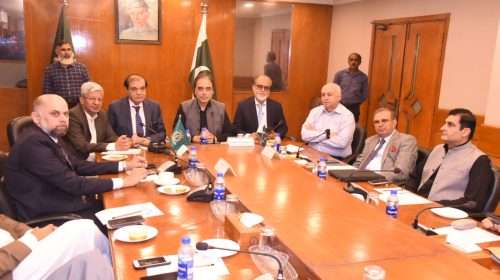
These views were expressed at a high-level seminar on recent changes proposed in the government’s net-metering and rooftop solar policies and the serious concerns arising from them for both industry and consumers. The seminar was organised by the Federation of Pakistan Chambers of Commerce & Industry (FPCCI) in collaboration with Energy Update.
Addressing the gathering, the Senior Vice-President of FPCCI, Saquib Fayyaz Magoon, emphasised that Pakistan must follow the example of developed economies by fully exploiting its untapped renewable energy resources in the larger interest of consumers and industries burdened by high electricity costs. He stressed that with such abundant clean energy resources available locally, industries should not be forced to shut down due to unaffordable power tariffs. He urged the government to resolve electricity pricing issues at the earliest, warning that any further delay could prove detrimental to the very survival of Pakistan’s industrial base.
Providing the government’s perspective, the Adviser to the Power Division of the federal government, Faizan Ali Shah, assured participants that the proposed changes to the net-metering regime were not intended to hinder Pakistan’s progress towards renewable energy. He explained that the amendments were aimed at correcting certain financial anomalies in the electricity tariff system. He noted that the government was mindful that the rapid rollout of rooftop solar systems by affluent segments of society should not result in an unfair financial burden on ordinary consumers who lacked the means to install such systems.
He further stated that the proposed changes were aligned with international best practices, where developed countries gradually withdrew financial incentives for solar power usage after achieving their national clean energy targets. He recalled that net-metering had been introduced in Pakistan over a decade ago at a time of acute electricity shortages and minimal reliance on renewable sources. He added that the regime now required amendment, as Pakistan was already meeting up to 55 per cent of its electricity needs through renewable energy, while the problem of electricity shortfall had largely been resolved.
He added that the government planned to meet over 90 per cent of Pakistan’s electricity demand through renewable energy sources by 2035.
Highlighting regional comparisons, he said India’s annual energy demand stood at 1,695 terawatt-hours (TWh), compared with 111 TWh for the Netherlands and 183 TWh for the UAE. In contrast, Pakistan’s energy demand was only around 100 TWh, despite the country being geographically much larger than both the UAE and the Netherlands.
The Power Division’s Adviser told the participants that the electricity purchase price of the Quaid-e-Azam Solar Park was 14 US cents per unit at the time of its commissioning, which had since declined to around 3 US cents per unit—a rate comparable to that offered to consumers under the proposed net-metering arrangements.
From the industry’s standpoint, the Chairman of the Pakistan Solar Association (PSA), Waqas Moosa, cautioned that any drastic changes to the net-metering regime could push rooftop solar consumers towards battery-based systems with minimal reliance on the national grid. He warned that such a shift would further aggravate the financial difficulties already being faced by public sector power distribution companies.
The PSA Chairman told the seminar that solar power systems with a cumulative generation capacity of around 40 gigawatts (GW) had been installed across the country, of which 6 GW comprised the total net-metering capacity by 2025. According to PSA estimates, Pakistani consumers had invested approximately US$2 billion in rooftop solar installations.
He stressed that surplus electricity generated through massive rooftop solar installations should instead be utilised to supply power to off-grid villages and to reduce electricity tariffs for industries, thereby strengthening the national economy. He also underlined that consumers who had invested their hard-earned savings in rooftop solar systems to cut soaring electricity bills should not suffer financially due to ill-conceived policy changes aimed at favouring independent power producers receiving inflated capacity payments.
Highlighting future opportunities, he pointed out that excess solar power could be used to establish electric vehicle charging stations, including home-based charging facilities for EV owners. He further called for maximum automation and digitisation to ensure swift processing of net-metering licence applications, advocating a one-window operation that could issue licences within days without subjecting consumers to unnecessary bureaucratic hurdles.
He proposed that applications for new net-metering licences for systems with a generation capacity of up to 25 kilowatts (kW) should be processed directly by the DISCOs, instead of being referred to NEPRA, in order to ensure faster approvals.
Offering a broader economic perspective, a noted businessman, Mian Zahid Hussain, termed it utterly unwise for the government to simultaneously pay inflated capacity charges to under-utilised independent power producers while also purchasing excess electricity from domestic rooftop solar systems at high prices.
A clean energy advocate and financial analyst, Moin M Fudda, recalled that the net-metering system was first introduced in the United States in 1971, whereas in Pakistan, the government had begun reconsidering the regime merely a decade after its introduction. He argued that purchasing excess electricity from net-metering consumers at Rs 25.98 per unit shouldn’t be considered a financial burden, particularly when such power involved no line losses and was significantly cheaper than electricity produced by conventional IPPs.
Waqas Khaleeq, CEO of Smart Solar and an ardent advocate of clean power, highlighted that greater utilisation of solar energy could help Pakistan slash its massive annual oil import bill of approximately US$15 billion, while also reducing harmful carbon emissions caused by fossil fuel-based power generation.
Referring to India’s experience, he said net-metering was permitted there for solar systems with a generation capacity of up to one megawatt (MW). He noted that solar installations with a combined capacity of 11 GW had already been deployed in India, adding that two major Indian business conglomerates had entered into a joint venture and acquired 900,000 acres of desert land to establish large-scale solar manufacturing facilities.
Another solar industry leader, Muhammad Zakir Ali, expressed hope that Prime Minister Shehbaz Sharif, known as a strong advocate of renewable energy, would reject the proposed new changes to the net-metering regime to safeguard the genuine economic interests of consumers who had already invested in rooftop solar systems.
Concluding the discussion, the President of the National Forum for Environment & Health, Muhammad Naeem Qureshi, urged the government to fully consider the immense environmental benefits of solar energy in tackling the climate emergency, even while reviewing or withdrawing incentives for net-metering consumers. He appealed that equipment and technology used by Pakistan’s renewable energy industry should remain tax-free in the larger interest of the national economy and environmental sustainability.
On this occasion Energy Update’s Director Finance Ruqiya Naeem, CMO Engr. Nadeem Ashraf, Marketing Manager and Deputy Editor Mustafa Tahir and others also participated.