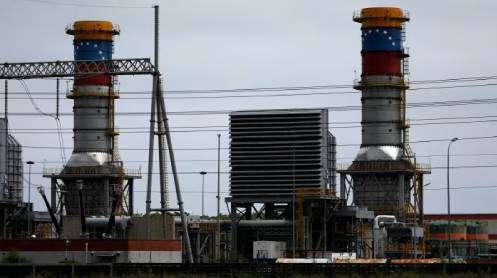
Washington: The United States has said it needs to control Venezuela’s oil sales and revenues indefinitely to stabilise the country’s economy, rebuild its energy sector and ensure Caracas acts in line with American interests, according to senior US officials.
The remarks underline the central role of crude oil in President Donald Trump’s Venezuela strategy, following the abduction and removal of former leader Nicolás Maduro in a US operation in Caracas last weekend.
Speaking at the Goldman Sachs Energy, CleanTech & Utilities Conference in Miami, US Energy Secretary Chris Wright said Washington must retain leverage over Venezuela’s oil exports to drive lasting change. He added that oil revenues would be used to stabilise the economy and, eventually, compensate US oil majors such as Exxon Mobil and ConocoPhillips for losses suffered when their assets were nationalised under former president Hugo Chávez.
US Vice President JD Vance was more explicit, saying that controlling Venezuela’s energy resources effectively meant controlling the country. “You’re allowed to sell the oil so long as you serve America’s national interest,” he said, adding that the strategy would exert pressure without risking American lives.
Democratic lawmakers criticised the approach, with Senator Chris Murphy likening it to seizing Venezuela’s oil by force, while analysts warned that prolonged foreign control could deepen political instability.
Venezuela, an OPEC member with the world’s largest proven oil reserves, currently accounts for only about one per cent of global supply after years of underinvestment and mismanagement. Wright said the US would first market stored Venezuelan oil and then manage future production, with revenues deposited into US-controlled accounts. He confirmed that sales have already begun, with major commodity traders and banks engaged to support the process.
Washington has also announced an initial deal to export up to $2 billion worth of Venezuelan crude to the US. President Trump said Venezuela has agreed to use oil proceeds to purchase American-made goods, calling it a “wise choice” for both countries.
Venezuela’s state oil company PDVSA confirmed progress in negotiations, stressing that any sales must be conducted at fair market prices. Meanwhile, shares of US refiners Marathon Petroleum, Phillips 66 and Valero Energy rose sharply on the news.
Trump is set to meet the heads of major US oil companies—including Exxon Mobil, ConocoPhillips and Chevron—at the White House to discuss boosting Venezuela’s production. Wright said US firms are willing to advise and support the sector’s recovery, though a return to historical production levels would take years.
Venezuela’s oil output, which reached 3.5 million barrels per day in the 1970s, averaged just 1.1 million bpd last year. While short-term gains are possible with new equipment and technology, US officials acknowledged that a full revival would require sustained investment and time.
By Reuters