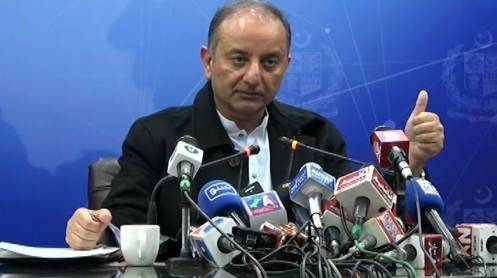
ISLAMABAD: Amid mounting public criticism over the large-scale cutting of trees in the federal capital, Minister for Climate Change and Environmental Coordination Dr Musadiq Malik on Friday defended the Capital Development Authority’s (CDA) actions, stating that around 29,000 paper mulberry trees had been removed in compliance with Supreme Court orders issued in 2023 and reiterated in 2025.
Speaking on a television talk show after chairing a meeting on the issue, the minister said paper mulberry is a non-indigenous and highly allergenic species, responsible for severe respiratory problems and deaths among chronic asthma patients. He added that the species was planted in Islamabad during the 1960s and its removal was undertaken after consultations with the Ministry of Health.
Dr Malik maintained that no non-native species would be planted in the future and assured that each tree felled would be replaced with three new saplings or trees, primarily indigenous and fruit-bearing species.
The clarification came in the wake of widespread media and public outcry over the cutting of thousands of mature trees in areas including Shakarparian, H-8, and Chak Shahzad. In Shakarparian alone, several patches of green cover were levelled, prompting citizens to claim that trees other than paper mulberry had also been cut — a charge consistently denied by the CDA.
Trees were also felled in the H-8 sector as part of a park upgradation project, while decades-old trees were removed in Chak Shahzad for the construction of a dual carriageway linked to the CDA-DHA housing scheme.
According to an official statement, the minister was briefed on an ongoing campaign to reduce the concentration of paper mulberry trees in Islamabad, particularly in areas where they account for over 90 per cent of tree cover, such as Shakarparian, F-9 Park, and sectors H-8 and H-9. The removed trees are to be replaced with native species, fruit-bearing trees, and pine varieties to restore ecological balance.
The meeting was attended by Minister of State for Interior Talal Chaudhry, CDA Chairman Mohammad Ali Randhawa, Climate Change Secretary Aisha Moriana, and senior officials from the CDA, Environment Protection Agency (EPA), Islamabad Wildlife Management Board (IWMB), and other relevant bodies.
Officials informed the meeting that Islamabad’s overall green cover would not be reduced, as plans include planting a higher number of trees — including mature native species — to accelerate environmental recovery. Enhanced coordination among the Ministry of Climate Change, EPA, IWMB, and CDA was also discussed to ensure timely plantation during the upcoming spring season.
Dr Malik directed the development of a transparent and clearly defined mechanism to ensure full compliance with environmental laws, rules, and licensing requirements for such campaigns, while stressing improved inter-agency coordination.
However, critics noted that the official briefing made no mention of tree cutting along Park Road in Chak Shahzad, an omission that has further fuelled controversy.
In an apparent response to public criticism, the CDA has launched a tree plantation drive in January, a period generally considered unsuitable for plantation due to frost. While earlier plantation campaigns traditionally began in mid-February, CDA officials defended the early start, stating that frost-resistant species such as Chir Pine were being planted and that the campaign — targeting 30,000 trees — would gain full momentum next month.
Despite these assurances, the early plantation drive has drawn criticism on social media, with environmentalists questioning its timing and effectiveness.
Story by Jamal Shahid