The US Energy Information Administration (EIA), in its Short-Term Energy Outlook (January 2026), forecasts a sharp rise in solar power deployment, with nearly 70 gigawatts (GW) of new solar capacity expected to come online in 2026 and 2027, marking a 49% increase in total US solar operating capacity compared to the end of 2025.
According to the EIA, total US electricity generation reached about 4,260 billion kilowatt-hours (kWh) in 2025. Generation is projected to grow by 1.1% in 2026 and 2.6% in 2027, reaching 4,423 billion kWh by 2027, driven largely by rising demand from data centres and electrification.
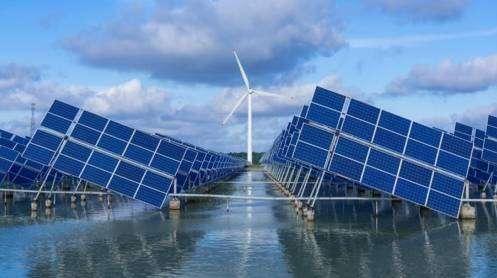
Huge potential for solar and wind in Pakistan While natural gas, coal and nuclear accounted for around 75% of electricity generation in 2025, their combined share is expected to decline to about 72% by 2027, as renewable generation continues to expand. Over the same period, the combined share of solar and wind is forecast to rise from 18% in 2025 to around 21% in 2027.
Utility-scale solar is expected to remain the fastest-growing source of electricity in the US. EIA projects solar generation to increase from 290 billion kWh in 2025 to 424 billion kWh by 2027, far exceeding earlier projections that had anticipated 286 billion kWh in 2025.
Texas is set to lead utility-scale solar expansion. Within the Electric Reliability Council of Texas (ERCOT) region, solar generation is expected to nearly double from 56 billion kWh in 2025 to 106 billion kWh by 2027. Significant growth is also forecast in the Midcontinent Independent System Operator (MISO) region, where solar generation is projected to rise from 31 billion kWh to 46 billion kWh over the same period.
To support the growing share of intermittent solar power, battery storage capacity is also set to expand rapidly. In ERCOT alone, battery capacity is expected to increase from about 15 GW in 2025 to 37 GW by the end of 2027.
The Outlook notes that natural gas-fired generation will remain relatively stable in the near term, totaling 1,696 billion kWh in 2026 and rising slightly to 1,711 billion kWh in 2027 as overall electricity demand increases. However, natural gas’s share of total generation is projected to decline from a peak of 42% in 2024 to about 39% by 2027.
Coal-fired generation, which rose by 13% in 2025 to 731 billion kWh due to cold weather and high gas prices, is expected to decline steadily. The EIA forecasts coal generation to fall by about 5% annually over the next two years, dropping to 661 billion kWh by 2027, primarily due to scheduled coal plant retirements.
Overall, the EIA Outlook underscores a continued shift in the US power mix, with rapid solar expansion and growing battery storage reshaping electricity generation while fossil fuels gradually lose share.
Courtesy PV Magazine