ISLAMABAD: The government has shelved a proposal to unilaterally revoke the implementation agreement with Asia Petroleum Limited (APL), citing concerns over potential damage to foreign investor confidence, and has instead decided to pursue an alternative use of the strategic pipeline to facilitate a third entry point for white oil imports into the country.
The Economic Coordination Committee (ECC) has approved the new approach and constituted a high-level committee to finalise the terms and conditions for the alternative use of the pipeline by January 31, 2026, viewing the move as a win-win solution for both the government and APL.
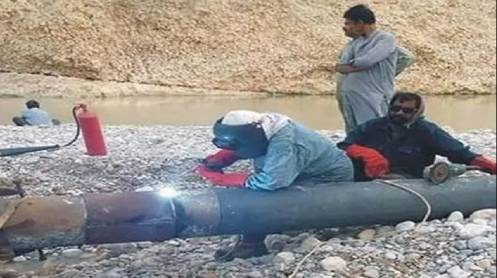
Asia Petroleum Limited, established in 1994 with the assistance of the World Bank as a public limited company, owns and operates an 82-kilometre-long, 14-inch diameter pipeline with a throughput capacity of 3.2 million metric tons per annum. The pipeline was originally commissioned to supply furnace oil to the Hub Power Plant. APL is a joint venture comprising Pakistan State Oil (PSO) with a 40 per cent stake, Infraone Limited of Hong Kong (20 per cent), Independent Petroleum Group of Kuwait (12.5 per cent) and Weco International (12.5 per cent).
The implementation agreement between APL and the government of Pakistan was signed on June 28, 2009, effective retrospectively from November 2, 1996, and remains valid until March 30, 2027. Under the agreement, the government guarantees a minimum annual throughput of 1.5 million metric tons at a tariff of $12.13 per ton for the first 10 years, which was later reduced to $6.99 per ton.
During a recent ECC meeting, three options were placed for consideration. The committee was informed that the National Task Force on Implementation of Reforms (Power Division), in a meeting held on October 28, 2024 — attended by the PSO managing director, APL chief executive and the director general (Oil) — had evaluated the matter and presented its recommendations.
One option involved unilaterally terminating the implementation agreement with effect from October 1, 2024, a move that the task force said would minimise legal exposure and execution risk while keeping payments aligned with the contractual framework until March 2027 by spreading the burden over quarterly instalments instead of a lump-sum settlement.
However, the ECC was cautioned that unilateral termination could lead to higher immediate fiscal outflows, potential litigation, reputational damage and negative signals to foreign investors. Strengthening investor confidence through the development of alternative uses for the strategic pipeline, including enabling white oil imports, was therefore favoured.
The Law Division had earlier advised the Petroleum Division to secure the consent of all stakeholders, while the Attorney General of Pakistan supported the alternative option. The Ministry of Planning also endorsed exploring a new use for the pipeline.
Under the umbrella of the Special Investment Facilitation Council (SIFC) and the National Task Force, PSO and other stakeholders agreed to finalise a way forward by January 31, 2026. The ECC subsequently approved a summary from the Ministry of Energy (Petroleum Division) titled “Future of Asia Petroleum Limited Pipeline” and formally endorsed the alternative use of the pipeline for fuel supply.
To this end, the ECC constituted a committee comprising representatives from the Petroleum Division, Finance Division, Law and Justice Division, SIFC, PSO and the National Task Force. The committee has been tasked with negotiating revised terms of the implementation agreement, including the guarantee agreement and the Letter of Agreement with APL, determining ownership of fuel in the pipeline, and submitting recommendations to the ECC by January 31, 2026.
The ECC also directed the ministers for petroleum and power to engage in consultations and propose viable alternative uses for the currently underutilised pipeline.
Story by ZAFAR BHUTTA