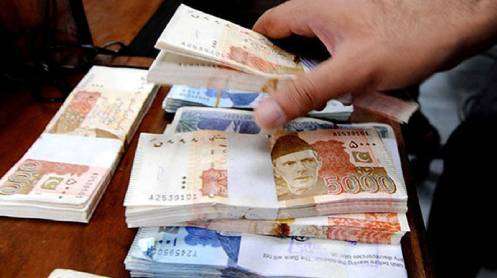
ISLAMABAD: The debt burden on every Pakistani surged by 13 per cent to Rs333,000 during the last fiscal year, while public debt continued to pose a major challenge due to a widening budget deficit that exceeded the statutory limit by nearly Rs3 trillion, according to the annual Fiscal Policy Statement presented to Parliament.
The Ministry of Finance reported that per capita debt rose from Rs294,098 in FY2023-24 to Rs333,041 in FY2024-25, reflecting an increase of about Rs39,000 within a year. The calculation is based on total public debt divided by the country’s estimated population of 241.5 million.
During the same period, total public debt climbed from Rs71.2 trillion in June 2024 to Rs80.5 trillion in June 2025, largely driven by higher interest payments and additional borrowing to finance expenditures beyond legal limits. As a result, public debt as a percentage of GDP increased from 67.6 per cent to 70.7 per cent.
The statement noted that FY2024-25, the first full financial year of the government led by Prime Minister Shehbaz Sharif, saw the federal fiscal deficit reach 6.2 per cent of GDP, far exceeding the 3.5 per cent ceiling prescribed under the Fiscal Responsibility and Debt Limitation Act (FRDL). Overall, the federal government spent Rs3.1 trillion, or 2.7 per cent of GDP, above the legally allowed deficit.
The finance ministry acknowledged that “public debt dynamics remained a key challenge”, attributing the rise in debt mainly to higher interest costs and exchange rate movements. It said the government’s medium-term debt management strategy focused on reducing gross financing needs, extending debt maturities and diversifying financing instruments.
For FY2024-25, total federal expenditure was budgeted at Rs18.9 trillion, including Rs17.2 trillion in current spending. Actual current expenditure stood at Rs15.8 trillion, while development spending reached Rs1.4 trillion against a budgeted Rs1.7 trillion. Defence expenditure slightly exceeded allocations, rising to nearly Rs2.2 trillion against a budgeted Rs2.1 trillion.
Interest payments amounted to Rs8.8 trillion, below the budgeted Rs9.8 trillion, while subsidies and pension payments reached Rs1.3 trillion and Rs911 billion, respectively.
On the revenue side, tax collection stood at Rs11.7 trillion, or 90.5 per cent of the Rs13 trillion target. Non-tax revenues outperformed expectations, reaching Rs5.1 trillion, mainly due to higher State Bank of Pakistan profits and petroleum levy receipts.
The report said the overall fiscal deficit, including provincial accounts, was contained at 5.4 per cent of GDP—lower than the budgeted 5.9 per cent—largely due to provincial cash surpluses and lower interest payments following a policy rate cut during the year.
Story by Shahbaz Rana