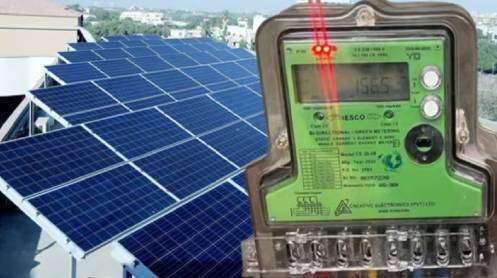
ISLAMABAD: Members of the National Assembly Standing Committee on Industries and Production strongly criticised the National Electric Power Regulatory Authority (Nepra) on Monday over its decision to replace net metering with net billing for rooftop solar consumers, warning that the move could damage investor confidence and harm the government’s credibility.
The committee, chaired by Syed Hafeezuddin, expressed serious reservations over the recent amendments to the solar policy. “This policy amendment will have serious implications for the overall reputation of the government,” the chairman said, adding that if commitments to independent power producers (IPPs) are honoured, the same respect should be extended to industries and individuals who invested under the net metering regime.
He noted that many industrial units had installed solar systems in response to government incentives but now find themselves in uncertainty following the policy shift. Committee members, along with the secretary industries, cautioned that the abrupt change could shatter investor trust and discourage industries from adopting clean energy technologies.
The panel observed that the rationale for transitioning from net metering to net billing appeared to lack a comprehensive and rational study by the Ministry of Energy (Power Division). Lawmakers stressed that promoting solar and other renewable energy solutions is essential to reducing the long-term cost of doing business in Pakistan.
Beyond the solar policy debate, the committee reviewed development projects under the Ministry of Industries and Production. After detailed scrutiny, several projects were rejected, and the Planning Commission was asked to provide monitoring reports. Members expressed frustration over project delays of six to nine years and escalating costs.
Dr. Mehreen Bhutto acknowledged that Covid-19, currency fluctuations, and political transitions had impacted project timelines but criticised departments for submitting incomplete briefs lacking even basic financial details. Other members, including Abdul Hakeem Baloch and Shahid Usman, challenged official claims regarding projects in Hub, Karachi, and Gujranwala, citing discrepancies between reports and ground realities.
The committee also questioned why departments preferred acquiring new land and constructing buildings instead of utilising assets of non-functioning state-owned enterprises (SOEs), with the chairman remarking that such practices partly explain persistent SOE losses.
Separately, Nepra has invited public comments on proposed amendments to the Nepra (Prosumer) Regulations, 2026, under Section 47(3) of the Regulation of Generation, Transmission and Distribution of Electric Power Act, 1997. The draft amendment seeks to revise sub-regulation (2) of Regulation 21 to clarify that existing approvals, licences, and agreements executed under the repealed 2015 net metering rules would remain valid until their expiry.
If approved, the amendment would apply retrospectively from February 9, 2026, ensuring that existing distributed generators continue billing under the earlier rates and mechanisms for the duration of their agreements.
The debate underscores growing tensions over solar policy reforms and their broader implications for Pakistan’s clean energy transition and industrial competitiveness.
Story by Zafar Bhutta