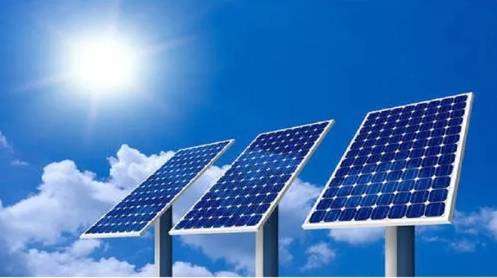
Pakistan imported 22 gigawatts of solar panels in 2024. That is more than what Canada or the United Kingdom installed in five years combined. Rooftop solar systems are spreading across the country at a remarkable speed. Households are generating their own electricity. The technology works perfectly. On paper, this looks like one of the great energy success stories of the developing world.
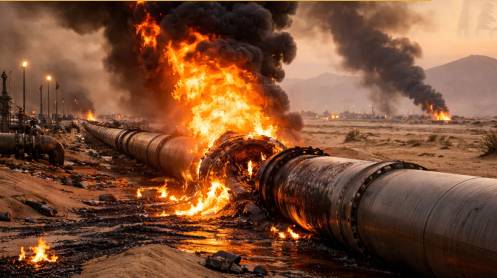
Yet the country’s circular debt hit PKR 3 trillion, growing by PKR 66 billion every single month. That is $235 million bleeding out every 30 days. Electricity prices keep rising for people who cannot afford solar panels. National grid demand dropped 3% despite the economy growing by 2.4%. And on 9th February 2026, the government changed the rules entirely, cutting what new solar users earn for their excess power from PKR 27 per unit down to PKR 11. The solar boom did not fix Pakistan’s energy crisis; it exposed every crack in a system that was never designed to handle it.
The paradox is stark. Solar panels are succeeding so brilliantly that they are breaking the system they were supposed to save. Of Pakistan’s total installed solar capacity, only 0.7 gigawatts are actually connected to the national grid. The rest is distributed chaos, thousands of rooftop systems generating power with zero coordination. They destabilise voltage. They create two-way power flows that the grid cannot handle. The National Electric Power Regulatory Authority (NEPRA) assessed 157 solar projects across the country. Only four met performance standards.
Solar panels have a failure rate of just 0.05%. The hardware is not the problem. What keeps failing are the systems, policies, and economics surrounding these panels. Pakistan is trying to bolt 21st-century energy solutions onto 20th-century infrastructure and 19th-century financial models, and the collision is now impossible to ignore.
How the Grid Became a Liability
Pakistan’s electrical grid was built for centralised coal and gas plants. Power flows in one direction only, from big plants to consumers. When thousands of households start generating solar power simultaneously, the grid must manage bidirectional flows that it was never engineered to handle. The result is voltage fluctuations, frequency instability, and transformer failures. Solar works perfectly. The grid does not.
But the technical problems pale against the financial catastrophe building quietly in the background. In the 1990s and 2000s, Pakistan’s government signed contracts with Independent Power Producers (IPPs). These are private companies that generate electricity and sell it to the state. The contracts guaranteed payment for capacity, whether that power was actually used or not. The government essentially promised: “We will pay you regardless.” At the time, with chronic power shortages, this made sense. Today, it is a disaster.
Now that wealthy households are installing solar and stopping the purchase of grid power, the government still owes IPPs their guaranteed payments. Those fixed costs, grid maintenance, capacity payments, and transmission infrastructure get spread over fewer and fewer customers. Who remains on the grid? The 40 million Pakistanis with no electricity access at all, and the poor who simply cannot afford solar panels. If behind-the-meter solar reaches 15% of total demand by 2030, grid customers’ bills could rise by 31%.
By December 2024, net-metered consumers had already shifted roughly PKR 159 billion of costs onto others. That is approximately $563 million. If this trend continues uncorrected, the total cost shift could reach PKR 4.24 trillion by 2034. One expert put it plainly: the current boom “risks creating a new class of privileged producers, financed by those least able to afford it.”
Policy Chaos Accelerates the Problem
The government initially encouraged net metering, a system where you install solar, generate your own power, and get credited for any excess electricity you send back to the grid. Households could effectively use the national grid as a giant battery. Excess solar power was credited at full retail rates. Under this policy, a typical rooftop solar system paid for itself in just two to four years. It was a genuinely good deal.
Then the government changed direction. Regulators proposed gross metering, where new solar owners would be forced to sell all their power to the grid first, then buy it back at higher rates. After protests, that proposal was delayed. Then came the “Prosumer” rules, where excess solar would be bought at wholesale prices instead of retail. Contract lengths shrank from seven years to five.
In November 2025, one proposal suggested cutting export credits from PKR 27 to PKR 10 per unit. Protests erupted again. That proposal was also delayed. Then, on 9th February 2026, NEPRA made it official. New solar consumers will receive just PKR 11 per unit for surplus electricity. The unit-for-unit adjustment that made solar financially attractive is gone for new entrants. Existing users keep their old terms, but only until their current contracts expire.
When rules change this frequently, nobody can plan. Capital flees. Projects get announced, then half-built, then quietly abandoned. Over 4,000 rooftop solar applications sat pending in mid-2025 due to grid bottlenecks and regulatory uncertainty. And the government’s stated reason for these changes, recovering fixed grid costs from solar users, is, according to energy experts, a cover story for something else entirely.
Critics argue this is less about grid stability and more about protecting the centralised power sector and the IPP contracts underpinning it. The monolithic system that created the circular debt crisis is now being defended by dismantling the one thing that was offering ordinary Pakistanis a way out.
Inequality Baked into the System
The solar boom did not arrive equally. Early adopters were almost exclusively middle and upper-class households. They had spare rooftop space. They had cash for installation or access to bank financing. These customers now save substantially on their bills and, until recently, earned money from their excess power.
Meanwhile, poorer households, who already pay cross-subsidies to keep power affordable for the poorest consumers, now cover an ever-larger share of fixed grid costs. Lower-income households cannot afford solar installations. The benefit goes to the wealthy. The burden shifts to everyone else.
A recent analysis warned that around 200,000 to 300,000 relatively well-off customers were reaping these solar windfalls, placing an additional 15% burden on the entire nation. In fiscal year 2024, Pakistan’s utilities lost roughly PKR 101 billion as grid sales fell by 3.2 billion units. Distribution companies’ recovery ratios, the percentage of billed electricity that is actually paid for, tumbled from 92% to 74% as revenues shrank. Capacity payments per unit rose from PKR 16.22 to PKR 17.31 between 2023-24 and 2024-25. The system is eating itself. Green energy is not reducing inequality in Pakistan. It is accelerating it.
Three Critical Solutions, and Why Each One Will Hurt
Every solution available to Pakistan is painful. Every solution carries severe trade-offs. There is no clean path forward. But doing nothing means watching circular debt compound until the entire system collapses. Here are the three most critical interventions, and an honest assessment of what each one will actually cost.
Solution 1: Renegotiate IPP Contracts
The government needs to shift from “pay regardless of usage” to performance-based payments. Capacity charges need to be renegotiated. The most expensive and least-used plants need to be phased out. Early terminations in 2024 already resulted in five IPPs being ended. Revisions in 2025 cut PKR 1.4 trillion total. That is the right direction.
But the consequences are severe. IPP owners face massive losses from forced cuts on guaranteed returns that were baked into their original risk calculations. Arbitration claims under international treaties will flood in. The International Centre for Settlement of Investment Disputes (ICSID) handles such cases. Bilateral investment treaties with China and Saudi Arabia protect their investors.
Many IPPs lack deep pockets for prolonged legal fights, expect bankruptcies, fire-sale exits, and abandoned plants. Retaliation will be intense. Lawsuits, international arbitration, and blacklisting by lenders like the International Finance Corporation (IFC) are all coming. Seven IPPs only agreed to tariff cuts after direct cabinet pressure. This mirrors Argentina’s utility battles after the 2001 economic crisis, a comparison that should alarm anyone who remembers how that ended.
Government credibility will suffer. Future energy bids will demand 30-50% higher returns or sovereign guarantees to compensate for perceived contract risk. Foreign investment in energy will fall sharply. Chinese state-owned enterprises, Gulf funds, and local investors will look at more stable neighbours instead.
The net result is five to ten years of underinvestment, power costs rising 10-20% to attract replacement capital, and rolling blackouts during summer peaks. But the alternative, doing nothing, means circular debt compounds until the system collapses entirely. Painful surgery now, or death by a thousand cuts later.
Solution 2: Upgrade Grid Infrastructure
Pakistan needs smart meters, upgraded transformers that can handle bidirectional power flows, distributed grid management systems, and microgrids for rural areas that cannot be served by a central grid that is already struggling. Without this, every additional solar panel installed anywhere in the country makes the overall system less stable.
The financial reality is brutal. Sixty percent of utilities in emerging markets do not collect enough revenue to cover their operating and debt service costs. Pakistan’s utilities are functionally insolvent. They cannot pay for current operations, much less multi-billion-dollar grid upgrades. Grid infrastructure adequate to handle current distributed solar would require $5-15 billion over five to seven years. Pakistan is currently negotiating an IMF bailout. There is no obvious source for this money.
If Pakistan turns to multilateral lenders like the World Bank or Asian Development Bank, it will attach conditions: tariff increases, subsidy removal, and utility privatisation. Tariff increases are politically explosive. Subsidy removal has triggered riots in other countries; Sri Lanka’s 2022 collapse is the clearest recent example. Utility privatisation brings public backlash and strikes.
New grid infrastructure also takes five to fifteen years to plan, permit, and build. Solar installations take one to two years. Pakistan is already five years behind before a single contract is signed. In the meantime, transformer failures will continue, voltage problems will keep damaging household appliances, and industrial customers will keep installing their own off-grid systems, shrinking grid revenue further. Every year of delay makes the eventual bill larger.
Solution 3: Progressive Tariffs and Community Solar
The only way to distribute the costs and benefits of solar fairly is through structural reform of how people pay for the grid. This means community solar farms, where groups of households share the costs and benefits together, combined with progressive tariffs, higher-income solar owners pay a grid maintenance fee, while lower-income households receive subsidised base rates.
The implementation obstacles are enormous. In the United States, a country with functioning regulators and deep capital markets, community solar developers report connection costs up to 40 times higher than anticipated. One utility quoted a project $20 million to connect to the grid. The project itself cost $8 million.
In Pakistan, where utilities actively resist grid connections because they reduce their revenue, those costs would be even more prohibitive. Community solar also requires signing up hundreds of paying subscribers per project. Marketing costs alone run 15-25% of project budgets. In Pakistan’s environment, add corruption risk, ghost subscribers, and payment defaults on top.
Progressive tariffs require means-testing every household to determine which bracket they fall into. Pakistan’s formal tax base covers approximately 1% of the population. Verifying income for subsidy allocation opens the door to corruption, leakage, and fake documentation on a significant scale.
Wealthy solar owners will also fight grid maintenance fees aggressively through courts and political connections. They installed solar precisely to escape high tariffs, and being taxed for doing so will not be accepted quietly. This solution is the most equitable option available. It is also the one that requires the most political courage to push through.
What Happens If Pakistan Does Nothing
If none of these reforms is implemented, the trajectory is straightforward. Circular debt compounds. Grid demand keeps falling as more wealthy households go solar. Fixed costs keep rising for those who remain. Utilities become insolvent, blackouts spread, and industrial activity relocates to countries with stable and predictable power. The death spiral accelerates until Pakistan hits a breaking point, and at that point, the solutions described above become politically impossible because all room to manoeuvre has been lost. That is the actual choice in front of policymakers: painful reform now, or collapse later.
The Real Lesson
Pakistan’s solar boom is not a failure. It is not a success story either. It is a warning. The technology works. The institutions do not. This pattern is appearing globally, in California, in Germany, in India, wherever distributed solar has grown faster than the systems around it could adapt.
When you place 21st-century renewable energy onto 20th-century infrastructure and 19th-century economics without reforming the underlying systems, you do not get a green transition. You get exactly what Pakistan has today: a clean energy boom that is making the energy crisis worse for the people who need help most.
The government’s decision to cut solar buyback rates in February 2026 is being presented as a solution to grid instability and circular debt. In reality, it is a patch applied to a wound that requires surgery. It protects the existing centralised power structure while pushing the costs of that protection onto new solar adopters and the grid-dependent poor alike.
The question is not whether solar panels work; they do. The question is whether the political will exists to reform the contracts, infrastructure, and tariff systems that determine who benefits from clean energy and who pays for it. So far, the answer has consistently been the same. The wealthy benefit. Everyone else pays. Until that changes, no amount of solar panels will fix Pakistan’s energy crisis.
Note: Pakistan’s NEPRA officially changed the net metering policy on 9th February 2026, replacing it with a net billing system for new solar consumers. This article, written before that change, predicted exactly this outcome. The policy shift confirms the core argument made here.