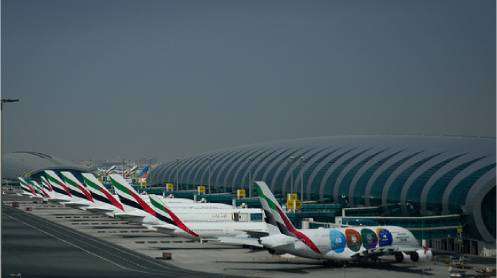
Karachi: The escalating conflict involving the United States, Israel, and Iran has begun to take a heavy toll on the global aviation sector, with airlines across the Middle East and South Asia reporting massive financial losses due to widespread airspace closures and operational disruptions.
According to industry estimates, Arab airlines collectively suffered losses of nearly USD 1 billion on the first day of the conflict alone. Within three days, cumulative losses reportedly surged to approximately USD 50 billion. In addition, declining airline share prices wiped out an estimated USD 23 billion in market value.
Analysts warn that if the conflict persists for another five days, total losses across the airline industry could escalate to as much as USD 100 billion, intensifying pressure on carriers already grappling with high fuel costs and volatile demand.
Airlines that continue to operate are facing operational losses ranging between USD 6,000 and USD 8,000 per hour due to extended flight routes, airspace closures, and emergency rerouting. Several regional air corridors have been restricted, affecting not only Middle Eastern carriers but also flights from countries such as India and Pakistan.
Among the hardest-hit carriers are Etihad Airways and Gulf Air, which are heavily exposed to disrupted regional routes. Meanwhile, Emirates and Qatar Airways are considered relatively better positioned due to strong state backing and diversified route networks.
Pakistan’s aviation sector is also experiencing significant strain. Approximately 45 percent of Pakistani flights — particularly those operating to Gulf destinations — are reportedly running at a loss. Flights to Saudi Arabia are operating on longer alternative routes due to airspace restrictions, leading to increased fuel consumption and higher operational costs.
Aviation experts caution that prolonged instability in the region could further disrupt global travel, weaken airline balance sheets, and negatively impact tourism, trade, and cargo operations. The situation remains fluid, with airlines closely monitoring geopolitical developments and adjusting schedules accordingly.