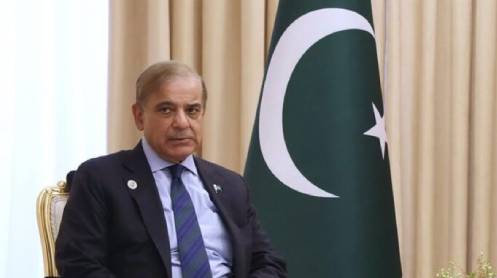
ISLAMABAD: Prime Minister Shehbaz Sharif on Monday announced a comprehensive national austerity policy aimed at reducing government expenditures and conserving fuel amid rising global energy prices and escalating tensions in the Middle East.
In a televised address to the nation after chairing a special meeting on austerity measures, the prime minister said the region was facing heightened instability following the U.S.–Israel strike on Iran, adding that Pakistan was actively pursuing diplomatic efforts to help defuse the crisis.
“The entire region is currently in a state of war,” he said, stressing that Pakistan is using diplomatic channels to promote peace and stability.
Sharif also highlighted ongoing security challenges along Pakistan’s western borders, noting that the country continues to face terrorism threats. He said the armed forces were responding effectively to these challenges under the leadership of Asim Munir, Chief of Defence Staff and Chief of Army Staff.
Major Austerity Measures
The austerity policy will apply to all federal and provincial ministries, departments, autonomous bodies, defence institutions, the judiciary and Parliament.
Under the plan, fuel allocations for all government vehicles will be reduced by 50 percent for the next two months, while operational vehicles such as ambulances, government buses and motorcycles will remain exempt. The move is expected to save Rs4.5 billion at the federal level. Additionally, 60 percent of government vehicles across federal and provincial departments will remain off the roads during this period.
All federal and provincial cabinet ministers, advisers and special assistants will voluntarily forgo their salaries and allowances for two months. Members of the national and provincial assemblies will face a 20 percent reduction in salaries and allowances, while officials in Grade 20 and above earning over Rs300,000 per month will have deductions equivalent to two days’ salary.
The government will also impose a 20 percent cut in the non-development budget for the fourth quarter of the current fiscal year across federal and provincial departments, which is expected to save around Rs22 billion at the federal level.
Administrative and Operational Restrictions
Among other key decisions announced:
- Immediate 50% reduction in petrol and diesel allowances for government vehicles.
- Ban on additional protocol vehicles for provincial ministers and senior officials, with only one security vehicle permitted.
- Work-from-home policy for government offices, with only essential staff required to attend physically.
- Closure of schools, colleges and universities from March 10 to March 31, with online classes allowed and examinations continuing as scheduled.
- Government meetings to be held online, while outdoor official events such as horse and cattle shows have been postponed.
- Establishment of District Petroleum Monitoring Committees to prevent hoarding and illegal sale of fuel.
- The Punjab Information Technology Board will develop a track-and-trace system for petroleum products under the supervision of district administrations and police.
Travel and Event Restrictions
The prime minister also announced a ban on foreign visits for federal and provincial ministers, advisers and government officials, except where deemed necessary for national interest. Official dinners, Iftar parties and seminars in hotels have also been suspended, with government venues to be used instead.
Public and private offices—excluding essential services—will operate four days a week, with 50 percent staff working from home. However, the policy will not apply to banks.
Addressing Rising Oil Prices
Sharif said the austerity measures were necessary as global crude oil prices have surged above $100 per barrel due to tensions in the Middle East. He warned that prices could rise further and stressed that the government was taking steps to reduce the financial burden on citizens.
Calling on the country’s wealthy and influential individuals to support national efforts, the prime minister said the time had come for the elite to demonstrate social responsibility.
He also warned that strict action would be taken against hoarding and profiteering, directing all provincial governments to ensure the immediate enforcement of the austerity measures.
The meeting announcing the measures was also attended by Field Marshal Asim Munir, Chief of Defence Staff and Chief of Army Staff.
Story by Zulfiqar Ahmed