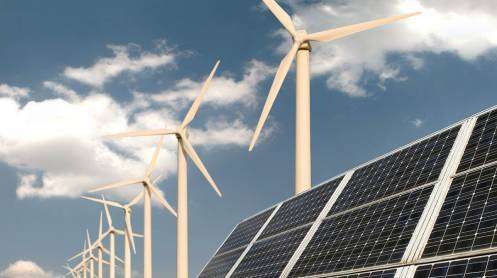
Beijing, China: As China’s renewable energy capacity surges, managing the end-of-life phase of wind and solar infrastructure has emerged as a critical challenge. With combined installed capacity exceeding 1.48 billion kilowatts as of March 2025—surpassing thermal power for the first time—the country is now turning its focus to sustainability beyond generation.
Early-generation renewable equipment, typically designed to last 20–25 years, is entering large-scale retirement. By 2050, decommissioned solar panels are projected to reach 20 million tonnes, while retired wind turbine blades could total 3 million tonnes by 2035, posing significant environmental and logistical concerns.
Addressing this, China Energy Investment Corporation (CHN Energy) is pioneering solutions to close the loop in green energy. The company, which holds the world’s largest installed wind power capacity and nearly 120 million kilowatts of combined wind and solar capacity, has made significant strides in recycling technologies.
In October 2025, its subsidiary launched a kiloton-scale photovoltaic module recycling demonstration line. Further expansion is underway, with a new facility in Zhangjiakou expected to begin operations in 2026, capable of processing over 10,000 tonnes of retired equipment annually.
CHN Energy has also taken a leadership role in shaping industry standards, contributing to around 17 international and national frameworks through initiatives under the China Association of Circular Economy.
Company officials emphasize that true green energy extends beyond clean generation to full lifecycle management. By integrating industry, academia, and research, CHN Energy aims to transform waste challenges into opportunities—marking a decisive step toward sustainable, circular renewable energy systems.