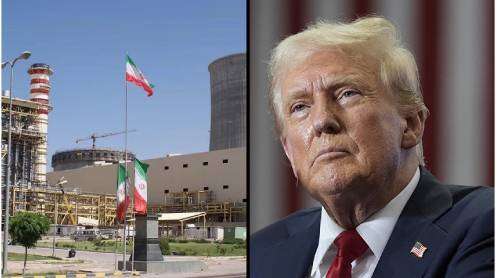
WASHINGTON/OCCUPIED JERUSALEM/TEL AVIV: Iran on Monday denied holding any negotiations with the United States, contradicting claims by Donald Trump, who announced a five-day delay in planned strikes on Iran’s power grid, citing “productive” discussions with Iranian officials.
Tehran dismissed the assertion as misinformation aimed at influencing global financial and oil markets. Iranian Parliament Speaker Mohammad Baqer Qalibaf rejected reports of engagement, calling them “fake news” designed to manipulate markets and deflect from mounting pressures on Washington and its allies.
Despite the denial, European and regional sources indicated that indirect communication has been ongoing, with Pakistan, Egypt, and Gulf states relaying messages between the two sides. Officials suggested that potential direct talks aimed at ending the conflict could take place in Islamabad in the coming days, although no formal confirmation has been issued.
Trump stated that US Special Envoy Steve Witkoff and adviser Jared Kushner had engaged with a senior Iranian figure, describing the discussions as “very strong” and hinting at a possible breakthrough. He also suggested that a comprehensive agreement to end hostilities in the Middle East could be within reach.
However, Iran’s position remains firm. Officials reiterated that any resolution must include an end to US and Israeli attacks, guarantees against future aggression, and recognition of Iran’s regional rights. Iran has also linked de-escalation to the reopening of the Strait of Hormuz, which it has effectively closed, disrupting nearly 20 percent of global oil and liquefied natural gas flows.
Meanwhile, tensions on the ground continue to escalate. Iran’s Islamic Revolutionary Guard Corps (IRGC) claimed responsibility for fresh strikes targeting Israeli cities, including Tel Aviv and Dimona, as well as US bases in the region. Israel confirmed missile launches from Iran, with interceptions reported over Jerusalem.
Israeli Prime Minister Benjamin Netanyahu said Israel would continue its military operations in Iran and Lebanon, while acknowledging that Washington sees an opportunity to leverage recent battlefield developments into a negotiated settlement.
Diplomatic efforts appear to be intensifying behind the scenes. Reports suggest that US Vice President JD Vance could join Witkoff and Kushner in potential talks with Iranian officials in Islamabad, following a recent conversation between Trump and Pakistan’s army chief, Field Marshal Asim Munir.
The White House confirmed the Trump–Munir call but declined to comment on any prospective meetings, describing the situation as “fluid” and sensitive.
Separately, Iranian President Masoud Pezeshkian and Prime Minister Shehbaz Sharif discussed the broader regional impact of the war, emphasizing the need for stability and enhanced cooperation.
With over 2,000 casualties reported since the conflict began on February 28, the situation remains volatile. While diplomatic signals suggest a possible opening for dialogue, continued military escalation underscores the fragility of any potential breakthrough.
Story by Reuters