China’s leading electric vehicle (EV) manufacturers are rapidly advancing ultra-fast charging technologies capable of delivering hundreds of miles of driving range in just minutes, positioning the country at the forefront of global EV innovation.
One of the biggest consumer concerns around EV adoption has been long charging times compared to conventional petrol or diesel refueling. To address this, automakers have heavily invested in next-generation charging solutions over the past decade, with “ultra-fast charging” now emerging as a promising breakthrough.
The race intensified in 2022 when XPeng introduced its S4 ultra-fast supercharging system, enabling its G9 SUV to gain approximately 210 kilometers of range in just five minutes.
In March 2026, BYD made a major leap by unveiling its new “flash chargers,” capable of delivering up to 1.5 megawatts of power—nearly four times higher than the 350 kW systems commonly available in the United States. Tests indicate that BYD’s batteries can charge from 10% to 70% in just five minutes, and up to 97% within nine minutes, offering a driving range of nearly 600 miles in the time it takes to refuel a conventional vehicle.
According to BYD CEO Wang Chuanfu, charging up to 97% is optimal, while the remaining energy can be recovered through regenerative braking.
A key factor behind BYD’s success is its vertically integrated manufacturing model, covering vehicle production, battery cells, and charging systems. The company has adopted lithium manganese iron phosphate (LMFP) batteries instead of traditional lithium iron phosphate (LFP), increasing energy density by around 5% while maintaining stability under high-power loads. To support ultra-fast charging, battery components—including electrodes, electrolytes, and separators—have been redesigned to withstand extreme power levels.
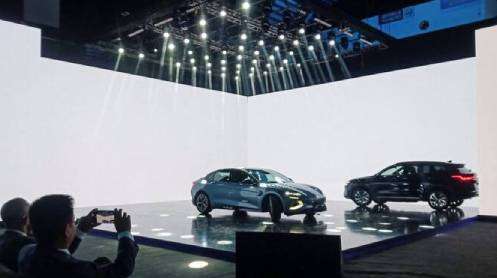
This cutting-edge technology is expected to debut in April in Paris with the launch of BYD’s new Denza Z9GT model. The company also plans to install over 16,000 charging stations across China and nearly 2,000 in Europe by the end of the year. Each station will feature additional battery storage to reduce grid pressure during peak demand. However, despite promising laboratory results, real-world performance remains to be fully evaluated.
Other Chinese players are also making significant strides. Zeekr has introduced an ultra-fast charger with liquid cooling, capable of delivering up to 1.2 megawatts per charging gun, although compatibility with different vehicle models is still being assessed.
Battery giant CATL has unveiled its second-generation Shenxing battery, offering charging power of up to 1.3 megawatts—equivalent to adding around 2.5 kilometers of range per second. The company has also pioneered sodium-ion batteries, which are seen as a cost-effective and scalable alternative.
Meanwhile, Huawei has developed a 1.5-megawatt fast-charging system designed for heavy electric trucks, capable of charging a 300 kWh battery in approximately 15 minutes.
Although the United States is striving to keep pace, no American company has yet achieved five-minute charging capability. Instead, firms like General Motors are focusing on reducing battery costs and improving range. In 2025, GM partnered with LG Energy Solution to develop lithium manganese-rich batteries, expected to be deployed in vehicles by 2028.
Experts believe that while ultra-fast charging represents a transformative breakthrough, widespread adoption will depend on overcoming challenges such as infrastructure readiness, grid capacity, and real-world performance validation.
As competition intensifies, China appears well-positioned to lead the next phase of EV evolution, bringing the industry closer to a future where charging an electric vehicle could be as quick and convenient as refueling a traditional car.
By Felicity Bradstock