LAUNCESTON: A month after military strikes by the United States and Israel on Iran, global markets for crude oil, refined products, and liquefied natural gas (LNG) are already operating under what analysts describe as the second-worst possible scenario.
At the center of the الأزمة lies the Strait of Hormuz, a critical maritime corridor that typically handles around 20% of the world’s oil, fuel products, and LNG shipments. The waterway remains largely inaccessible to commercial shipping, leaving global energy supplies severely constrained and markets highly vulnerable.
Despite claims from Washington and its allies of military success, the continued disruption of tanker traffic underscores a stark reality: without secure passage through Hormuz, energy markets remain hostage to geopolitical developments. Iran has demonstrated its capacity to target critical infrastructure across the Gulf, reinforcing its leverage over global supply chains.
Escalation Risks and Worst-Case Scenario
Analysts warn that the worst-case scenario would involve a major escalation, with Iran launching widespread attacks on Gulf energy infrastructure—targeting pipelines, refineries, export terminals, and processing facilities using missiles and drones.
Such an escalation could be triggered if Donald Trump proceeds with deploying ground forces to seize strategic Iranian assets, including the Kharg Island oil terminal and key positions along the Strait of Hormuz. While a military victory may be possible, it could come at the cost of triggering a full-scale energy crisis with global repercussions.
Markets Still Betting on De-escalation
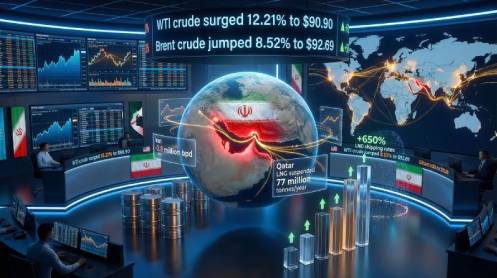
Interestingly, crude futures markets—particularly Brent—continue to price in a potential de-escalation and eventual restoration of normal supply routes. Brent crude has surged nearly 59% since late February, rising from around $72 to above $115 per barrel.
However, the physical fuel market tells a more alarming story. Prices of refined products in Asia have skyrocketed:
- Jet fuel has more than doubled, nearing record highs above $220 per barrel
- Gasoil (diesel component) has surged to over $180 per barrel
- Gasoline prices have jumped more than 65%
This divergence highlights severe supply tightness, especially in Asia, which typically receives nearly 80% of shipments passing through Hormuz.
Global Ripple Effects Intensifying
The immediate impact is being felt across Asian economies such as Australia and Indonesia, where refiners and importers are scrambling to secure alternative supplies. However, analysts warn that the disruption will soon spread globally as buyers turn to the Atlantic Basin, pushing prices higher worldwide.
Currently, the global market is effectively short by an estimated 10–12 million barrels per day, as flows through Hormuz—normally around 19 million bpd—have slowed to a near standstill.
Efforts by Saudi Arabia to reroute exports via the Red Sea and by the United Arab Emirates to increase shipments from Fujairah have only partially offset the supply shock.
A Prolonged Crisis Ahead?
While strategic petroleum reserves may provide temporary relief, analysts caution that they are insufficient to address a prolonged disruption. The real خطر lies in a drawn-out or escalating conflict that further damages energy infrastructure across the region.
Scenarios such as Iranian strikes on Saudi pipelines to the Red Sea or critical facilities in Fujairah could deepen the crisis, pushing global energy markets into uncharted territory.
As uncertainty intensifies, the world faces a precarious moment—where geopolitical decisions in the Gulf could determine the trajectory of energy prices, inflation, and economic stability worldwide.
By Reuters