ISLAMABAD: Energy experts and policymakers have cautioned the government against imposing taxes on solar panels and batteries, warning that such measures could undermine Pakistan’s energy security and penalise consumers who have helped stabilise the economy during global energy volatility.
The concerns were raised during a consultative dialogue titled “Beyond the Barrel: Making Pakistan Energy Secure in an Era of Geopolitical Shocks,” organised by the Pakistan Renewable Energy Coalition (PREC) in collaboration with the Alliance for Climate Justice and Clean Energy and the Sustainable Development Policy Institute.
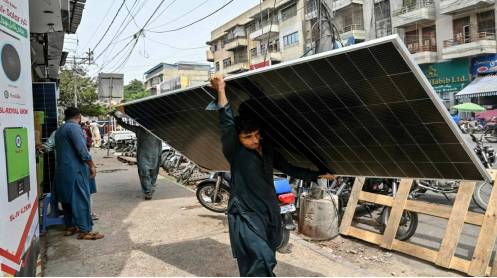
Speaking at the event, renowned economist Abid Qaiyum Suleri stressed the need for Pakistan to shift decisively towards renewable energy and storage solutions to shield the economy from recurring global shocks. He warned that taxing solar technologies at this stage would weaken both energy resilience and consumer protection.
Dr Suleri highlighted that rising international oil prices—if exceeding $105 per barrel—could push domestic inflation back into double digits, placing additional strain on households and social safety systems, particularly under the ongoing IMF programme.
International expert Lidy Nacpil underscored that many Asian economies, including Pakistan, are grappling with debt burdens and high capacity payments linked to legacy power purchase agreements. She urged policymakers to renegotiate such agreements and accelerate a transition towards clean energy.
Participants emphasised that energy security must go beyond reliance on imported fuels and instead prioritise indigenous renewable resources, storage systems, and grid modernisation.
Highlighting geopolitical risks, Engr Ubaidur Rehman Zia of SDPI noted that disruptions such as the Strait of Hormuz crisis have exposed the vulnerability of fossil fuel-dependent economies. Rising fuel costs, he said, are cascading into higher prices for electricity, transport, and essential goods, disproportionately affecting low-income segments.
Reinforcing the economic case for renewables, Nabiya Imran of Renewables First stated that Pakistan’s growing adoption of solar energy has already helped the country avoid approximately $12 billion in oil and gas imports since 2018, strengthening the balance of payments.
Legal expert Muhammad Abdul Rafe pointed out that increasing gas prices have pushed industries towards self-generation through solar, reducing reliance on imported LNG. However, he warned of structural challenges, including surplus LNG commitments due to rigid contracts and misaligned planning.
Closing the discussion, Muhammad Badar Alam of the Policy Research Institute for Equitable Development reaffirmed civil society’s commitment to a just and evidence-based energy transition. He noted that recommendations from the dialogue would contribute to advocacy efforts for the FY2026–27 federal budget.
The dialogue concluded with a strong consensus that Pakistan must urgently adopt a proactive, renewables-led energy strategy to ensure long-term energy security, affordability, and resilience, particularly in the face of ongoing global disruptions.
Story by Bakhtawar Mian