Tensions in the Middle East escalated sharply as the United States military announced it would begin enforcing a naval blockade on all Iranian ports starting Monday, following the breakdown of high-stakes negotiations held in Islamabad.
The move comes after talks between Washington and Tehran failed to yield an agreement, with Donald Trump blaming Iran’s refusal to abandon its nuclear ambitions. The announcement signals a significant escalation in the ongoing conflict, raising fears of further destabilisation in global energy markets.
According to United States Central Command, the blockade will target vessels entering or leaving Iranian ports across the Arabian Gulf and Gulf of Oman, beginning at 1400 GMT. However, ships transiting the strategically vital Strait of Hormuz to and from non-Iranian ports will not be impeded.
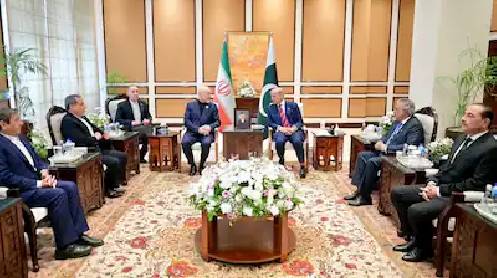
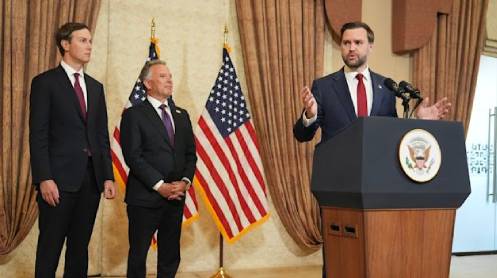
The decision follows the departure of US Vice President JD Vance from Islamabad after negotiations with an Iranian delegation failed to produce a breakthrough. The collapse of talks has dashed global hopes for a permanent ceasefire in a conflict that has already claimed thousands of lives and disrupted international trade since late February.
In a series of statements, President Trump confirmed the military action, emphasizing that the objective is to secure maritime routes and prevent Iran from leveraging control over key shipping lanes. Earlier, he had suggested a broader blockade of the Strait of Hormuz, though the final plan appears more limited in scope.
Iran reacted strongly to the announcement. Islamic Revolutionary Guard Corps warned it maintained full control over traffic in the strait and would respond forcefully to any provocation. Iranian Parliament Speaker Mohammad Bagher Ghalibaf stated that Tehran would not yield to external pressure, while Navy Chief Shahram Irani dismissed the blockade as “ridiculous.”
Iranian Foreign Minister Abbas Araghchi blamed the failure of talks on what he described as “maximalist demands” and shifting conditions imposed by the US, insisting that both sides had been close to an agreement.
The blockade threat has already rattled global markets, with oil prices surging by nearly 8%, pushing benchmark crude above $100 per barrel. The Strait of Hormuz remains a critical artery for global energy supplies, handling a significant share of the world’s oil and gas shipments.
Meanwhile, Pakistan, which mediated the talks, has reiterated its commitment to facilitating dialogue and urged both sides to uphold the fragile two-week ceasefire. Analysts warn that a maritime blockade could effectively signal a resumption of full-scale conflict.
The broader regional situation remains volatile. The conflict, which began after joint US and Israeli strikes on Iran, has since expanded, with continued hostilities involving Lebanon. Israeli Prime Minister Benjamin Netanyahu has indicated that military operations remain ongoing, while cross-border exchanges with Hezbollah continue to fuel instability.
As diplomatic efforts falter and military posturing intensifies, the risk of a wider regional conflict—and its implications for global energy security—continues to grow.