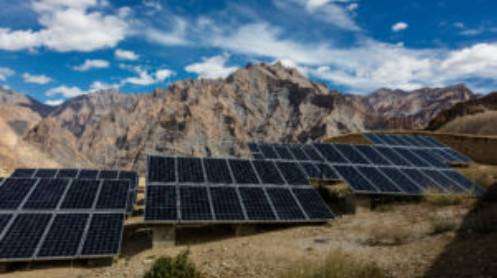
ISLAMABAD: The Hindu Kush Himalaya (HKH) region holds vast untapped potential for renewable energy, yet clean sources currently contribute just 6.1% of its total energy supply, according to a new report.
Titled Together We Have More Power: Status, Challenges, and the Potential for Regional Renewable Energy Cooperation in the Hindu Kush Himalaya, the study was released by the International Centre for Integrated Mountain Development (ICIMOD) and presented at an event hosted by the Sustainable Development Policy Institute (SDPI) in Islamabad.
The report highlights that fossil fuels dominate the energy mix in the eight HKH countries—Afghanistan, Bangladesh, Bhutan, China, India, Myanmar, Nepal, and Pakistan—with Bangladesh generating 98% of electricity from fossil fuels, India 77%, Pakistan 76%, China 67%, and Myanmar 51%. The authors stress that stronger regional cooperation in technology, infrastructure, and cross-border energy trade could position these nations as global leaders in clean energy.
SDPI Executive Director Dr Abid Qaiyum Suleri noted the findings carry significant implications for Pakistan, emphasizing that dependence on fossil fuels leaves the country vulnerable to global price shocks. He added that regional solar and wind grid integration could reduce import costs and support climate change mitigation efforts.
ICIMOD Deputy Director-General Izabella Koziell described the HKH, often called the “Third Pole,” as crucial for regulating the global climate while being highly climate-vulnerable. She urged enhanced regional collaboration in research and innovation.
Dr Abid Hussain of ICIMOD highlighted that the region sustains nearly 3.4 billion people and that HKH rivers are essential for energy and livelihoods. The renewable energy potential is estimated at 3.5 terawatts, but only 6% has been tapped due to social, technical, and political barriers.
Shubhuti Kiran Ghimire of ICIMOD Nepal said the organisation is implementing climate-resilient basin management projects in Nepal, Bhutan, and Pakistan to promote sustainable water and energy practices.
The report calls on all eight HKH nations to adopt a collective strategy to expand renewable energy, achieve Sustainable Development Goal 7, and secure a sustainable energy future for one of the world’s most climate-sensitive regions.