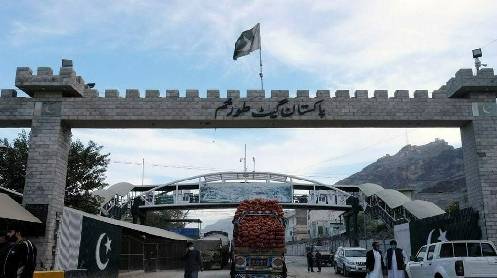
KARACHI: The prolonged closure of the Pakistan-Afghanistan border since Oct 11 amid heightened bilateral tensions has severely disrupted trade flows, choking crucial exports and straining supply chains across multiple sectors. Stakeholders report a mix of economic setbacks and temporary advantages, while analysts warn that a continued deadlock could deepen pressure on Pakistan’s export-oriented industries. Some experts, however, note that the halt may slow the influx of smuggled goods into Pakistan.
Thank you for reading this post, don't forget to subscribe!Cement and Coal Supplies Hit Hard
A major cement manufacturer said the suspension of cross-border movement has halted Afghan coal imports and cement exports to Afghanistan entirely. As a result, the price of local Darra coal has surged to Rs42,000–45,000 per tonne, up from Rs30,000–32,000, while Afghan coal—previously priced at Rs30,000–38,000—is unavailable.
Cement mills in the northern region, heavily reliant on Afghan coal, have shifted to imported coal from South Africa, Indonesia and Mozambique. Pakistan’s cement sector requires nearly four million tonnes of coal annually as alternative kiln fuel.
Analysts warn that companies with greater exposure to Afghan exports face the biggest hit. Insight Research identifies Cherat Cement, Fauji Cement and Maple Leaf Cement as the most vulnerable, with Afghan markets contributing 9.8pc, 5.8pc and 3.1pc of their revenues. D.G. Khan Cement has already confirmed reliance on imported coal at $90–100 per tonne due to the border situation.
Pharmaceutical Exports Face Major Setback
According to former PPMA chairman Dr Kaiser Waheed, Pakistan exports medicines worth $187 million to Afghanistan through formal channels, with informal exports estimated to be triple that volume. Exporters warn of piling consignments awaiting clearance, adding that many medicines destined for Afghanistan have limited demand in Pakistan.
The Searle Company has estimated a potential annual loss of Rs2 billion if the closure persists. Insight Research reports that Afghan exports contribute between 1.9pc and 8.1pc of revenue for several listed pharmaceutical firms, with overall exposure as high as 45pc for certain exporters.
Compounding the crisis, Afghanistan has imposed a three-month ban on Pakistan’s medicine imports, further escalating trade tensions.
Containers Stranded, Supplies Stretched
Qazi Zahid Hussain, former PAJCCI president, said 700–750 containers are stranded at Chaman and 350–400 at Torkham, while over 9,000 containers—including 500 bound for CIS countries—are stuck at ports awaiting onward movement.
Fruit and Vegetable Exporters Suffer Heavy Losses
PFVA Patron-in-Chief Waheed Ahmed said Pakistan’s fruit and vegetable exports to Afghanistan and CIS markets total about $150m annually, but the halted trade has forced stakeholders to dump perishable items at low prices or destroy spoiled produce.
Efforts to reroute via Iran are underway, but exporters require banking instruments—currently banned—creating another bottleneck. PAJCCI President Junaid Makda described the situation as “alarming,” noting that truck drivers stranded in Afghanistan face food shortages, lack of cash and security risks.
Local wholesale markets are now seeing rising arrivals of Iranian fruits. Pomegranate prices have jumped to Rs4,000–4,500 per 10kg carton, from Rs2,000–2,500 before the shutdown.
Ghee, Oil and Flour Trade Also Affected
PVMA Chairman Sheikh Umer Rehan said Pakistan had been exporting 6,000–8,000 tonnes of ghee monthly to Afghanistan, but this has now stopped. Flour exports had already declined in recent years, with Pakistan losing the Afghan wheat market to Russia, Turkmenistan and Kazakhstan.
Former PFMA Sindh Chairman Aamir Abdullah said, “In reality, we have lost the Afghan market for wheat and flour products, along with the foreign exchange earnings.”
Analysts Caution Against Prolonged Deadlock
With thousands of containers stranded, exporters struggling with mounting losses and industries scrambling for costly alternatives, analysts warn that Pakistan may face deeper economic strain if the border standoff continues—threatening not only trade with Afghanistan but also key regional markets linked through Afghan transit routes.
Story by Aamir Shafaat Khan