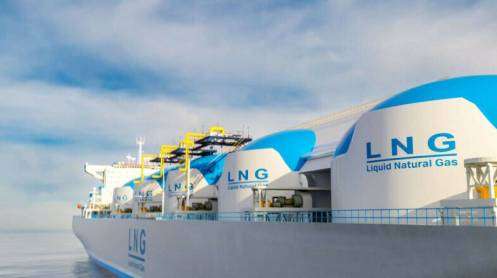
Petroleum Minister Ali Pervaiz Malik announced on Sunday that Pakistan will begin selling its surplus liquefied natural gas (LNG) in international markets from January 1, aiming to ease financial pressure and curb mounting losses in the gas sector.
Speaking at a press conference in Lahore, the minister said Pakistan had been importing LNG from Qatar and Italy’s Eni, but reduced power sector consumption in recent months created an excess supply. As a result, the surplus gas was diverted to households, adding to circular debt and causing an estimated loss of around Rs1,000 billion since 2018-19.
Malik said exporting excess LNG would help reduce this burden while enabling state-owned enterprises to operate at full capacity and generate profits.
He highlighted recent developments, including Pakistan’s agreement to cancel 21 LNG cargoes under its long-term contract with Eni and ongoing discussions with Qatar to defer or resell future cargoes.
The minister also outlined significant upcoming foreign investments in the petroleum sector. He noted that Turkish Petroleum, following a recent visit by Turkiye’s energy minister, would re-enter Pakistan’s market after 20 years for both onshore and offshore exploration. The company will soon open an office in Islamabad, creating jobs for both Turkish and Pakistani professionals.
Malik added that a delegation from Azerbaijan’s SOCAR would visit Pakistan next week to explore collaboration in oil and gas exploration. SOCAR will also open an office in Pakistan and invest millions of dollars in constructing an oil pipeline from Machike to Thalian in partnership with PSO and FWO. Construction is expected to begin within six weeks.
Providing an update on the Reko Diq project, the minister said private fundraising of $3.5 billion had been completed, with banks now finalising agreements. Combined investment from local firms and Canada’s Barrick Gold is expected to exceed $3.5bn, bringing total investment in the first phase to $6-7bn. A signing ceremony is anticipated within the next two months at the Prime Minister’s House.
Malik said these initiatives reflect Pakistan’s commitment to reducing reliance on imported fuels and expanding domestic energy production.
Additional input from Reuters