NEW DELHI / ISLAMABAD: India’s renewed push to advance controversial hydropower projects on the Chenab River has triggered strong reactions from environmentalists and Pakistan alike, amid growing concerns over climate change, fragile Himalayan ecology, and the future of the Indus Waters Treaty (IWT).
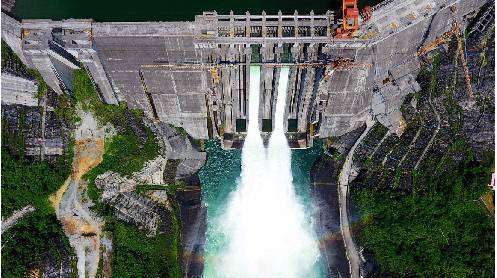
India’s Ministry of Environment has recently approved the 260-megawatt Dulhasti Stage-II hydropower project in Kishtwar district of India-held Jammu and Kashmir, according to The Hindu. Earlier reports also indicated that environmental clearances were revived for the much larger Sawalkote hydropower project on the same river.
These approvals have come in the wake of India’s unilateral suspension of the 1960 Indus Waters Treaty following the Pahalgam incident earlier this year—an allegation Pakistan has denied, describing the move as an “act of war.” Islamabad has repeatedly warned that New Delhi is “weaponising water,” particularly after abrupt fluctuations in the Chenab and Jhelum river flows unsettled farmers in Punjab.
Earlier this month, Foreign Minister Ishaq Dar underscored that the Permanent Court of Arbitration (PCA) had reaffirmed the continued validity of the treaty and its dispute-resolution mechanisms. He also cited concerns raised by United Nations rapporteurs over India’s actions related to the treaty.
Projects under scrutiny
The Sawalkote project, with a planned capacity of 1,856MW, has remained stalled for decades due to forest clearances and IWT-related compliance issues. Although still in the pre-construction phase, its environmental clearances have been repeatedly revived.
Dulhasti Stage-II, a 258MW run-of-the-river project, is designed to utilise water discharged from the existing 390MW Dulhasti Power Station. Estimated to cost around $35 million, it is part of a broader set of Chenab basin projects. According to official estimates, the project will require 60.3 hectares of land, including 8.27 hectares of private land from the villages of Benzwar and Palmar in Kishtwar district.
With the treaty effectively in abeyance, The Hindu reported that India is pushing ahead with several hydropower schemes in the Indus basin, including Sawalkote, Ratle, Bursar, Pakal Dul, Kwar, Kiru, and Kirthai I and II.
Climate change concerns
Environmentalists warn that these projects are unfolding at a time when Himalayan glaciers are retreating at an alarming rate. The Chenab River, formed by the confluence of the Chandra and Bhaga rivers in Himachal Pradesh’s Lahaul and Spiti region, is classified as a Western River under the IWT and is allocated primarily to Pakistan.
Studies estimate that between the signing of the treaty and 2004–05, glacial volume in the Chenab basin declined by around 33.3 per cent. The South Asia Network on Dams, Rivers and People (SANDRP) has cautioned that nearly 50 per cent of the Chenab’s flow at Akhnoor is derived from glacial melt.
“Glaciers act as natural reservoirs, releasing water gradually during spring and summer,” the NGO noted. “Around 60 per cent of irrigation across the Indus basin depends on glacial melt. As most of these glaciers are located in the Indian Himalayas, their degradation threatens water security for millions in both India and Pakistan.”
Environmentalists draw parallels with rivers that have vanished over time, warning that unchecked development and climate stress could push rivers like the Chenab toward a similar fate.
Pakistan’s response
While Pakistan’s Foreign Office has yet to issue a formal statement on the latest approval, former climate change minister and PPP Senator Sherry Rehman strongly condemned the move.
In a post on X, she termed India’s actions a “flagrant violation” of the Indus Waters Treaty, stressing that the agreement cannot be unilaterally revoked—a position recently affirmed by UN rapporteurs.
“Pakistan has control over the waters of the Indus, Jhelum, and Chenab rivers, while the Ravi, Beas, and Sutlej fall under India’s control,” she said, adding that fast-tracking disputed projects such as Dulhasti Stage-II, Sawalkote, Ratle, and Bursar forms part of a broader strategy following the treaty’s illegal suspension.
“This weaponisation of water is neither sane nor acceptable in a region already on the frontlines of climate change and environmental stress,” Senator Rehman warned. “It will only inflame tensions in an already fragile bilateral relationship marked by hostility and deep mistrust.”