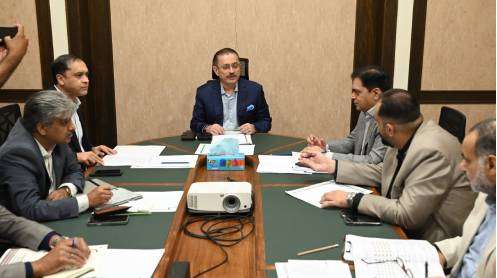
Islamabad: The federal cabinet has reportedly halted the proposed increase in profit margins for oil marketing companies (OMCs) and petroleum dealers, earlier approved by the Economic Coordination Committee (ECC), and linked any future increase to complete digitisation of the petroleum supply chain.
Thank you for reading this post, don't forget to subscribe!According to informed sources, the cabinet—chaired by Prime Minister Shehbaz Sharif—did not endorse the ECC’s decision of December 9 to allow an additional Rs2.56 per litre increase on petrol and diesel in two phases. Instead, the prime minister directed that implementation of the increase be made conditional on 100 per cent digitisation, potentially effective from June 1, 2026.
The ECC, under Finance Minister Muhammad Aurangzeb, had approved revisions in OMC and dealer margins in line with the Consumer Price Index for 2023-24 and 2024-25, with increases capped between 5pc and 10pc. Half of the increase was to be implemented immediately, while the remaining half was tied to progress on digitisation, with a review due by June 2026.
Under the ECC plan, OMCs were to receive a Rs1.22 per litre increase and dealers Rs1.34 per litre, raising margins to Rs8.48 per litre for OMCs and Rs9.31 per litre for dealers in the first phase. A second equal increase would have pushed margins to Rs9.10 and Rs9.98 per litre, respectively. Currently, OMCs earn Rs7.87 per litre, while dealers receive Rs8.64.
Despite fuel price reductions on Dec 15 and Dec 31, the government did not notify any margin increases. Officials said the prime minister, a strong proponent of the Digital Pakistan Initiative, opposed partial implementation and insisted on full digitisation of sales, stocks, and live connectivity with bodies such as OGRA, FBR and the Petroleum Division.
The decision follows the Petroleum (Amendment) Act 2025, which mandates IT-based tracking of petroleum products from import and production to retail sales to curb smuggling, adulteration and illegal decantation—practices estimated to cause Rs300–500 billion in annual revenue losses.
Oil refineries and OMCs have long urged stricter enforcement and border controls to tackle smuggling of petroleum products, including LPG, which continues to hurt legitimate businesses and government revenues.
Story by Khaleeq Kiani