ISLAMABAD: Prime Minister Shehbaz Sharif has directed relevant authorities to introduce uniform gas tariffs for fertiliser plants and is considering ending subsidised gas supplies to the industry, with a proposal to extend direct financial support to farmers through the Benazir Income Support Programme (BISP) instead.
Sources told The Express Tribune that a committee on gas supply, headed by Deputy Prime Minister Ishaq Dar, is already working on a framework for uniform gas pricing for fertiliser manufacturers. The prime minister issued the directive while reviewing the allocation of gas from Mari Energies to fertiliser plants, noting that disparities in gas prices had created market distortions.
In a separate meeting chaired by the premier, officials discussed a proposal to shift subsidies away from fertiliser producers and provide targeted assistance directly to farmers through BISP, aiming to ensure transparency and curb misuse.
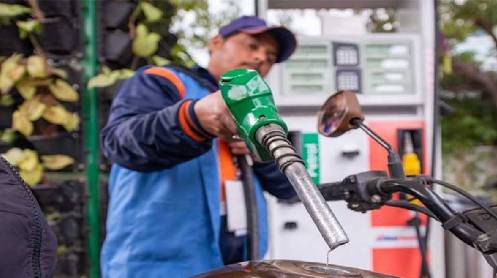
The government is also considering tagging fertiliser bags as part of a broader drive to digitise key sectors, including petrol filling stations. The move is aligned with proposals from the Federal Board of Revenue (FBR) to monitor production, sales and inventory in order to curb tax evasion and address artificial price hikes caused by hoarding and stock dumping by dealers.
Tagging fertiliser bags would enable authorities to track sales and stock levels more effectively, while helping the FBR gather real-time data to detect tax irregularities in the sector.
Meanwhile, the federal cabinet has ratified an earlier decision to allocate locally produced gas from Mari Energies’ fields to fertiliser plants. The Economic Coordination Committee (ECC) approved the supply of gas from Mari’s Ghazij/Shawal reservoirs to three fertiliser plants, while Engro’s base fertiliser plant connected to the Mari network will receive gas through Sui Northern Gas Pipelines Limited (SNGPL).
Mari Energies currently produces gas from four reservoirs — Habib Rahi Limestone, Sui Upper Limestone/Sui Main Limestone, Ghazij/Shawal and Goru-B Deep. The company has repeatedly raised concerns over circular debt, which it says is constraining investment in energy projects, including plans to develop offshore fields.
The company has warned that it cannot proceed with an investment exceeding $1 billion for the full-scale development of the Ghazi Ghaisakhori field without assurances of sustainable gas offtake and timely payments. Pakistan’s circular debt currently stands at around Rs2.6 trillion.
In correspondence with the government, Mari Energies also cited a Wood Mackenzie study showing a sharp decline in gas demand on public utility networks, particularly from the power sector, due to higher tariffs and levies on captive power plants — further complicating investment decisions in the upstream gas sector.
Story by Zafar Bhutta