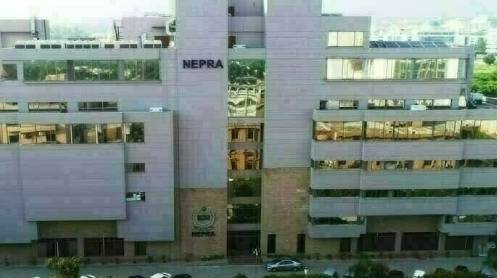
Islamabad: Despite more than three decades of reforms and policy interventions, Pakistan’s power sector continues to struggle with inefficiencies that undermine economic growth and erode consumer confidence, the National Electric Power Regulatory Authority (Nepra) has observed in its State of the Industry Report 2025.
The regulator noted that gains achieved through renegotiation of power producer contracts have largely been offset by persistent operational and governance failures. Inefficiencies in distribution companies (Discos) alone have contributed around Rs400 billion to the circular debt, while consumers paid approximately Rs235bn in debt servicing surcharge during 2024–25 due to systemic inefficiencies rather than sound business practices.
Nepra stated that although some structural and policy-level measures were undertaken, overall progress remained insufficient to enable sustained industrial growth or provide meaningful tariff relief across all consumer categories. The sector continues to face deep-rooted challenges in planning, execution, and governance that limit its efficiency and economic contribution.
The report highlighted underutilised generation capacity as a major financial burden, resulting in capacity payments for idle plants. Transmission infrastructure remains both constrained and underutilised, preventing optimal dispatch of cheaper electricity under the Economic Merit Order and pushing up tariffs.
On the distribution side, government-owned Discos continue to suffer from poor governance, excessive transmission and distribution losses, weak bill recovery, and load-shedding based on Aggregate Technical and Commercial (AT&C) losses. These shortcomings further aggravate asset underutilisation and fuel the circular debt.
Nepra also pointed to declining generation capacity, which fell from 45,888MW in June 2024 to 41,121MW by June 2025 following contract terminations and decommissioning, despite the addition of an 884MW hydropower plant. The utilisation factor of thermal and nuclear plants remained low at 38.82pc, even as generation costs accounted for nearly 82pc of consumer electricity tariffs.
While acknowledging government efforts to reduce tariffs, the regulator noted that inefficiencies in public-sector power plants—including Guddu, Neelum-Jhelum, and several Wapda hydropower projects—have diluted the intended financial relief from reforms and IPP tariff adjustments.
Lower utilisation of Thar coal-based plants and delays in coal supply arrangements have further raised generation costs, while the 4,000MW Matiari–Lahore HVDC transmission line operated at only 35pc utilisation, despite payments based on full availability.
Nepra identified KE, Pesco, Hesco, Sepco, and Qesco as the poorest-performing utilities, citing excessive losses, weak recoveries, poor service quality, and high consumer dissatisfaction. Persistent issues such as delayed connections, billing disputes, and net-metering delays continue to undermine public trust.
The regulator also expressed concern over weak accountability within Discos, ineffective boards, and diluted enforcement powers due to prolonged legal and administrative processes, warning that without decisive governance reforms, inefficiencies will continue to cripple the sector’s performance and sustainability.
Story by Khaleeq Kiani