LAHORE: As Pakistan’s circular debt in the energy sector continues to mount and policy fragmentation deepens institutional paralysis, the Businessmen Panel (BMP) of the Federation of Pakistan Chambers of Commerce and Industry (FPCCI) has strongly criticised the government’s handling of the sector, warning that repeated policy missteps and delayed structural reforms are pushing the economy towards prolonged instability.
Thank you for reading this post, don't forget to subscribe!Former FPCCI president and BMP Chairman Mian Anjum Nisar said the government’s renewed push for an Integrated Energy Plan may appear encouraging, but without addressing long-standing policy distortions, it risks becoming yet another bureaucratic exercise disconnected from economic realities. He stressed that Pakistan’s energy crisis stems not from a lack of plans, but from weak implementation, poor coordination and disregard for market-based principles.
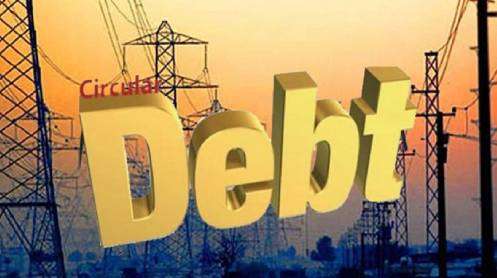
He described the swelling circular debt as the clearest manifestation of governance failure, attributing it to politically driven tariff controls, inefficient power procurement, demand overestimation and unchecked capacity payments. Temporary measures, such as interest payments to state-owned entities, he said, merely defer the problem rather than resolve it.
Nisar also criticised the absence of a unified policy approach, noting that key ministries—power, petroleum, water resources and finance—continue to operate in silos, leading to contradictory decisions that inflate costs and undermine investor confidence. He warned that businesses ultimately bear the brunt of these inconsistencies.
Highlighting the impact on industry, he said energy prices in Pakistan are now significantly higher than in competing regional economies, eroding industrial competitiveness and export potential. Unpredictable tariffs, frequent fuel price adjustments and unreliable supply, he added, are forcing many manufacturers to scale back or shut down operations, accelerating deindustrialisation and unemployment.
Questioning the effectiveness of new steering committees and planning frameworks, Nisar cautioned that without clear targets, timelines and accountability, structural reforms would remain cosmetic. He urged that any Integrated Energy Plan be aligned with industrial, trade and export policies, warning that overinvestment in generation capacity without corresponding demand growth has saddled the system with heavy fixed costs.
He further criticised the continued reliance on costly imported fuels despite Pakistan’s indigenous energy potential, calling for greater focus on domestic gas exploration, hydropower, renewables and efficiency improvements. While welcoming the proposal for an Energy Information System, he warned that data transparency alone would be insufficient without political will to act on evidence and include meaningful private sector participation in policymaking.
Unless decisive action is taken, Nisar warned, circular debt will continue to resurface in different forms, trapping Pakistan in a cycle of crisis management and stifling long-term economic growth.