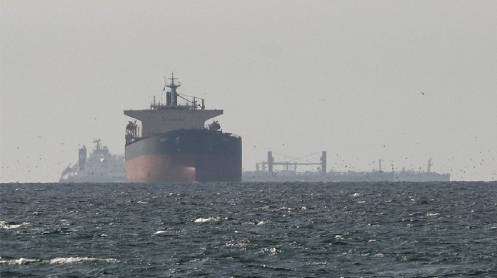
RIYADH: Amid severe disruptions to global oil shipments caused by escalating Middle East tensions, Saudi Arabia has activated a long-standing contingency plan to transport crude oil across the desert to the Red Sea, bypassing the strategic Strait of Hormuz.
With the critical shipping route effectively blocked due to the ongoing conflict involving Iran, the Gulf’s major petroleum exporters are facing an unprecedented logistical crisis. Attacks on energy infrastructure and growing regional instability have forced producers to look for alternative routes to maintain global supply.
To manage the disruption, Saudi state-owned oil giant Saudi Aramco is ramping up the use of the East-West Pipeline, commonly known as Petroline, which runs across the kingdom from the Gulf coast to the Red Sea.
Speaking during a recent earnings call, Aramco President and CEO Amin H. Nasser described the situation as the most serious challenge the region’s energy industry has faced in decades.
“While we have faced disruptions in the past, this one by far is the biggest crisis the region’s oil and gas industry has faced,” Nasser said, warning that prolonged disruption could have “catastrophic consequences for the world’s oil markets.”
The Petroline network stretches about 750 miles, linking the oil-producing Gulf region to export terminals on the Red Sea. The pipeline has an estimated capacity of around seven million barrels per day, and Aramco is working to increase flows through the system in the coming days.
However, analysts note that the pipeline can only partially offset the loss of shipments through the Strait of Hormuz. Energy analyst Jim Bianco, president of Bianco Research, said the Petroline was transporting roughly one million barrels per day before the conflict, leaving room for about six million additional barrels.
Even at full capacity, this remains far below the roughly 21 million barrels of oil per day that typically passed through the Strait of Hormuz before the crisis.
The conflict has intensified across the Gulf following retaliatory strikes by Iran in response to attacks by the United States and Israel. Iranian actions have reportedly targeted US assets and energy facilities across the region, forcing several refineries offline and disrupting liquefied natural gas exports.
Reports also suggest that Iran has begun mining the Strait of Hormuz, further complicating efforts to reopen the vital shipping lane through which nearly 20 percent of global energy supplies normally pass.
Meanwhile, concerns remain that alternative export routes may also be vulnerable. The Petroline terminates at Red Sea facilities that could potentially fall within range of attacks by Houthi movement if the conflict expands.
Analysts warn that while Saudi Arabia’s desert pipeline offers a temporary workaround, it cannot fully compensate for the closure of one of the world’s most critical energy chokepoints.
By AFP