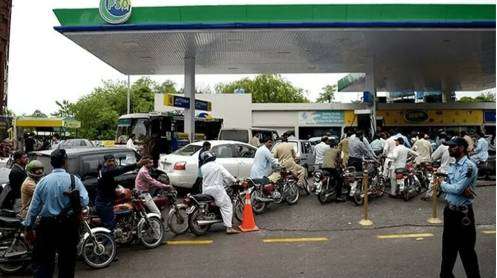
LAHORE / PESHAWAR / KARACHI: The recent Rs55 per litre increase in fuel prices has triggered widespread economic ripple effects across Pakistan, driving up transportation costs, pushing food prices higher and placing additional strain on households already grappling with traditional inflation during the holy month of Ramadan.
Citizens from different walks of life say the sharp hike has further complicated daily survival amid rising living costs.
“It was the last thing Pakistanis needed and the government delivered it mercilessly,” said one respondent, adding that managing household expenses has become an increasingly difficult challenge.
Traders and professionals have also criticized the government’s handling of the price increase. Anees Ahmad Khan, a trader from Lahore, said the manner in which the hike was announced added to public frustration.
“In the morning, federal ministers said Pakistan had around a month’s fuel stock and that international prices would not immediately affect consumers, but the price increase came soon after,” he said.
Economists warn that fuel price hikes rarely remain confined to petrol pumps and quickly spread across the broader economy.
“Conventional economics tells us that oil price hikes trigger a chain reaction across the economy,” said Prof. Kamran Butt. “They increase transportation costs, push up prices of essential commodities and food items, reduce purchasing power, raise poverty and unemployment, slow economic activity and ultimately fuel public discontent.”
Daily wage earners and gig workers are among the hardest hit by the increase.
Muhammad Ramzan, a motorcyclist delivering food for an international chain, said his income has been severely affected. “After working nearly 12 hours a day, I barely make Rs1,000. I use about three litres of petrol daily, and the latest increase means an extra Rs165 expense — nearly 16.5 per cent of my income.”
Traders say the impact of fuel price hikes is already visible in wholesale markets.
Muhammad Idrees, a vegetable vendor at Ravi Road Market in Lahore, said prices of fruits and vegetables rose by 20 to 25 percent within hours of the fuel price announcement. “Perishable items are the first to be affected. Vegetable sales remain steady, but fruit sales have already declined,” he said.
The transportation sector has also begun passing the higher costs on to commuters. Nasir Iqbal, a driver working with an app-based ride-hailing service, said fares are expected to increase by 15 to 20 percent, while the number of passengers is likely to decline.
In Karachi, commuters reported higher fares for several modes of transport, including Qingqi rickshaws, minibuses, coaches and ride-hailing services. Many passengers said they were forced to switch to cheaper transport options to manage daily expenses.
One commuter said fares on his route had increased by Rs10 to Rs30, forcing him to change buses and occasionally request lifts from strangers to reach his workplace.
Passengers also reported that the fare for a single stop on Qingqi rickshaws and buses had increased from Rs20 to Rs30. Some said disputes over higher fares often led to arguments with drivers and conductors.
Transport costs are also affecting access to healthcare. A resident said taking his brother-in-law for dialysis at Indus Hospital now costs between Rs4,000 and Rs4,500, compared to about Rs3,000 previously.
In Peshawar, the fuel price increase has pushed up commodity prices and inter-city travel fares, while petroleum dealers report a sharp decline in fuel sales.
Haji Waheed, president of the KP Grain Dealers Association, said the price of a 20kg bag of flour has risen by Rs50 to Rs100, now selling between Rs2,650 and Rs2,700. He attributed the increase to higher transportation and milling costs.
Transporters in the province say fare adjustments were unavoidable. Khan Zaman Afridi, president of the KP Transport Owners Association, said the fare from Peshawar to Lahore had increased from Rs2,000 to Rs3,000, while the fare to Karachi had risen from Rs3,000 to Rs5,000.
Meanwhile, petroleum dealers report a noticeable drop in fuel consumption. Najeebullah, spokesperson for the Petroleum Dealers and Cartage Contractors Association KP, said sales at one filling station fell from about 8,000 litres per day to just 3,000 litres following the price hike.
Analysts warn that unless fuel prices stabilise soon, the pressure on household budgets and inflation during Ramadan could intensify further.
Story by Ahmad Fraz Khan | Manzoor Ali | Dawar Shoaib