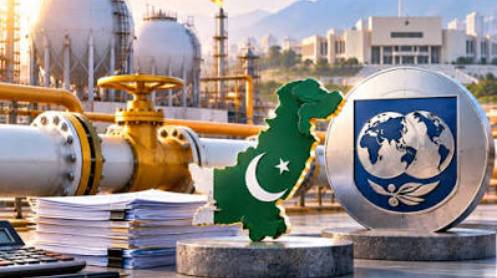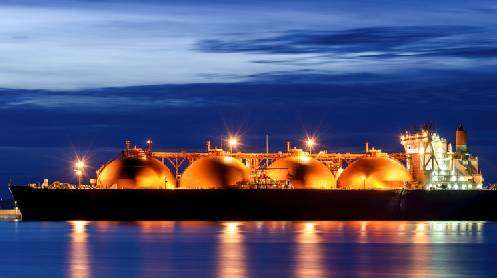
Rising geopolitical tensions and shipping disruptions in the Middle East are exposing South Asia’s massive investments in liquefied natural gas (LNG) infrastructure to significant economic and energy security risks, according to a new report by Global Energy Monitor (GEM).
The report, based on data from GEM’s Asia Gas Tracker, reveals that India, Bangladesh, and Pakistan have collectively announced or are developing LNG terminals and gas pipelines worth approximately $107 billion. The region currently accounts for 17 percent of global LNG import capacity under development, equivalent to 110.7 million tonnes per annum, and 17 percent of global gas pipelines by length, totaling 34,146 kilometers.
Bangladesh and Pakistan are both planning LNG import infrastructure capable of roughly doubling their existing capacity, while India is pursuing the world’s second-largest expansion of LNG terminal capacity and the third-largest gas pipeline expansion globally.
However, the report warns that the region’s heavy reliance on imported LNG could leave it vulnerable to price volatility and supply disruptions. Energy markets have already been shaken by price spikes following attacks involving the United States, Israel, and Iran, along with renewed shipping disruptions in the strategic Strait of Hormuz—a critical route for global energy trade.
Although analysts expect a global LNG supply surplus later this decade, GEM notes that even a balanced market can quickly tighten if shipping routes or production are disrupted. Such volatility can significantly increase delivered LNG prices, making gas less competitive compared with alternative energy sources.
The report also highlights that the three South Asian countries are highly price-sensitive LNG importers with a history of project cancellations. Over the past decade, India, Bangladesh, and Pakistan have collectively cancelled or shelved two to three times more LNG import capacity than they have successfully commissioned. Proposed LNG terminals in South Asia have also shown higher failure rates than similar projects in Europe.
The ongoing Middle East conflict underscores how quickly LNG-dependent markets can shift from growth opportunities to affordability crises, increasing the risk that many planned projects could be delayed, stalled, or abandoned.
Meanwhile, renewable energy is rapidly gaining ground in the region. Solar power capacity in Pakistan has more than tripled in the past three years, while India is expected to generate over 40 percent of its electricity from renewable sources by 2030. Emerging technologies such as energy storage systems and green hydrogen are also strengthening the case for reducing reliance on imported gas.
Robert Rozansky, Global LNG Analyst at Global Energy Monitor, noted that South Asian economies have faced similar challenges in the past.
“Countries that rely on LNG imports are highly vulnerable to price shocks,” he said. “This highlights the risks of investing heavily in new gas infrastructure, especially when domestic alternatives like renewable energy are becoming more affordable and reliable over the long term.”