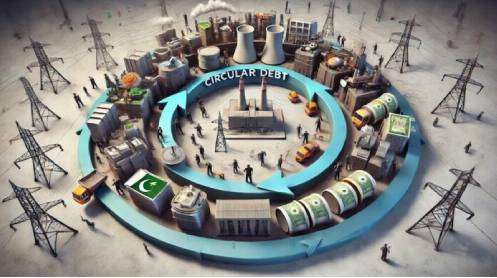
ISLAMABAD: The government of Pakistan has sought approval from the International Monetary Fund (IMF) for a plan to retire Rs1.5 trillion in gas sector circular debt within three years, using dividends from major public sector gas companies, LNG savings and funds collected through petroleum levies.
The proposal was discussed during the latest review talks under Pakistan’s $7 billion bailout programme, though negotiations ended without a final decision. Government officials said Islamabad hopes to secure the IMF’s approval before June so that provisions can be included in the upcoming federal budget to retire at least one-third of the principal debt.
According to officials, the settlement would require oil and gas companies to waive over Rs1.6 trillion in late payment surcharges, which accumulated due to delayed payments on the principal amount.
The country’s total gas sector circular debt has exceeded Rs3.4 trillion, including around Rs1.8 trillion in principal liabilities. However, the government plans to settle about Rs1.5 trillion, as the remaining amount is tied up in tax refund claims and ongoing court cases.
Under the proposed plan, the government intends to generate Rs850 billion through dividends and additional payouts from major state-owned energy firms, including Oil and Gas Development Company Limited, Pakistan Petroleum Limited and Government Holdings Private Limited. Another Rs400 billion is expected to come from savings generated through LNG cargo diversions.
In addition, the government has proposed imposing a Rs5 per litre levy on petrol and diesel to help finance the circular debt settlement. Officials say around Rs4 per litre from petrol prices and Rs1 per litre from diesel is already being collected for this purpose.
Deputy Prime Minister Ishaq Dar recently directed the finance ministry to earmark funds collected through the additional levy on petroleum products since January. The levy currently generates about Rs12 billion per month, though officials say the finance ministry has been reluctant to allocate the funds specifically for debt settlement.
However, the IMF has expressed reservations about parts of the plan. One of the Fund’s concerns is that LNG savings worth nearly Rs400 billion could instead be used to reduce overall energy costs for consumers rather than servicing debt.
The IMF has also raised questions about the potential impact of extracting Rs850 billion in dividends from state-owned exploration companies, warning that such measures could affect their financial stability and future investment capacity. The Fund has also sought clarification on the implications for minority shareholders in these companies.
Government officials argue that settling the circular debt would ultimately benefit exploration and production firms by clearing long-standing receivables from the gas supply chain.
Pakistan recently renegotiated some of its LNG supply arrangements with Qatar due to lower domestic demand and the inability of the power sector to lift contracted cargoes amid reduced electricity consumption.
Meanwhile, Federal Petroleum Minister Ali Pervaiz Malik noted that Qatar had recently declared force majeure following attacks on its energy facilities linked to tensions involving Iran. The development has allowed Pakistan to revive around 400 million cubic feet per day (mmcfd) of local gas production.
In recent years, the government has significantly increased gas tariffs, including fixed charges for consumers and pricing new residential gas connections at imported LNG rates instead of the blended cost of local and imported gas.
Authorities have also assured the IMF that gas prices will continue to be adjusted twice annually—in July and February—to prevent further accumulation of circular debt in the sector.
Story by Shahbaz Rana