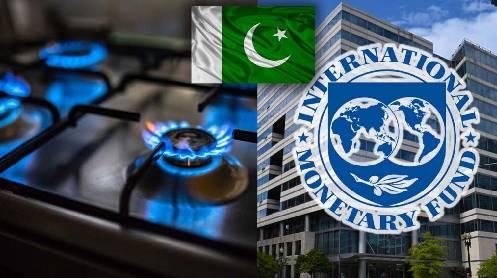
ISLAMABAD: The International Monetary Fund has turned down Pakistan’s request to freeze the 15 per cent additional gas levy on captive power plants (CPPs) and to grant exemptions to efficient industrial units, dealing a setback to the government’s efforts to ease pressure on industry.
During ongoing review talks, the government proposed maintaining the current levy rate and excluding industries that undergo gas efficiency audits. However, the IMF rejected both proposals, insisting that the levy should remain a key policy tool to discourage industries from generating in-house electricity using gas.
The Petroleum Division had also urged the IMF not to raise the levy to 20 per cent from August, warning that higher rates were already suppressing demand for both local and imported gas. Petroleum Minister Ali Pervaiz Malik reportedly made multiple attempts to persuade the Fund, arguing that the levy was contributing to mounting financial losses for gas utilities.
Officials highlighted that imported liquefied natural gas (LNG) was increasingly being diverted to low-end consumers, while industrial demand was declining due to high costs. In the first half of the current fiscal year, Sui gas companies reportedly incurred losses of Rs104 billion, with levy collections falling short of expectations.
However, the IMF attributed these losses primarily to long-term LNG contracts and reduced gas offtake by the power sector amid declining electricity demand. The Fund maintained that the levy should be viewed as a “punitive measure” to phase out inefficient captive power generation and shift industries to the national grid.
The government also proposed revising the levy calculation formula by using a weighted average of peak and off-peak industrial tariffs instead of linking it solely to peak tariffs. While the IMF agreed to review the suggestion, it has not yet taken a final decision.
Captive power plants — many of which operate at around 30 per cent efficiency — have long been criticised for consuming expensive gas resources. Although some industries claim efficiency levels of up to 55 per cent, these figures remain unverified due to resistance to third-party audits.
Officials noted that industries had ample time to comply with audit requirements but repeatedly obtained court stay orders to avoid implementation.
Under existing rules, the levy is calculated based on the difference between industrial grid tariffs notified by NEPRA and the cost of self-generation using gas priced by OGRA. The policy aims to make in-house generation increasingly unviable, with total costs expected to approach Rs6,000 per unit.
The IMF has also not yet endorsed the government’s Rs1.5 trillion plan to reduce circular debt in the gas sector, which includes using dividends from exploration companies, imposing a Rs5 per litre levy on petroleum products, and utilising savings from LNG diversion.
The dispute comes at a time when industries — particularly export-oriented sectors — are already facing rising energy costs due to shifting from gas-based generation to the national grid. At the same time, the government is providing partial subsidies on petrol and diesel while maintaining a high petroleum levy of around Rs106 per litre.
The outcome of the ongoing IMF review remains uncertain, with broader disagreements also emerging over revenue targets and recent fuel subsidy decisions.
Story by Shahbaz Rana