ISLAMABAD: Pakistan has expressed readiness to host direct negotiations between Iran and the United States to help de-escalate the ongoing Middle East conflict, with both sides reportedly showing confidence in Islamabad’s role as a neutral facilitator.
Deputy Prime Minister and Foreign Minister Ishaq Dar said Pakistan would be “honoured” to host meaningful talks aimed at achieving a comprehensive and lasting peace settlement in the region.
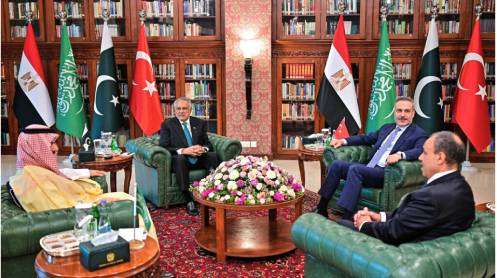
The announcement came after the second consultative quadrilateral meeting in Islamabad, attended by the foreign ministers of Saudi Arabia, Türkiye, and Egypt. Participants unanimously supported Pakistan’s initiative and emphasized dialogue and diplomacy as the only viable path to regional stability.
Saudi Foreign Minister Faisal bin Farhan Al Saud, Türkiye’s Hakan Fidan, and Egypt’s Badr Abdelatty reaffirmed their commitment to reducing tensions and preventing further military escalation.
Dar noted that the foreign ministers held in-depth discussions on the evolving regional situation and agreed that continued conflict would only result in widespread destruction and economic hardship. He stressed the importance of unity within the Muslim world during these challenging times.
Pakistan has also engaged key global stakeholders to support its peace efforts. Dar confirmed consultations with Wang Yi, who conveyed China’s full backing, and António Guterres, who endorsed the initiative on behalf of the United Nations.
He added that Pakistan maintains strong diplomatic engagement with both Tehran and Washington, including contacts with Iranian President Masoud Pezeshkian and Foreign Minister Abbas Araghchi, as well as ongoing communication with the US administration.
“Pakistan is encouraged that both Iran and the United States have expressed confidence in its ability to facilitate talks,” Dar said, reiterating Islamabad’s commitment to pursuing peace through sustained diplomatic efforts.
The meeting also resulted in a decision to establish a joint committee of senior officials from the four countries to develop a framework for enhanced cooperation and coordinated diplomatic engagement.
Officials warned that the ongoing conflict poses serious risks to regional stability, including disruptions to vital maritime routes such as the Strait of Hormuz, underscoring the urgency of immediate de-escalation and structured negotiations.
Story by Naveed SiddiquiAFP