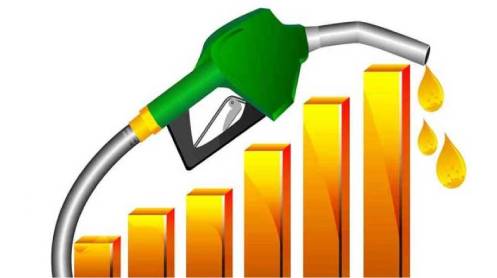
ISLAMABAD: The federal government, in consultation with provincial administrations, is preparing for another significant increase in petrol and diesel prices within the coming days, aiming to partially pass on the rising import costs to consumers while protecting vulnerable segments.
According to senior officials, the exact hike will depend on global market fluctuations, with authorities not ruling out a full pass-through of international prices. However, targeted subsidies are expected for key groups, including motorcyclists and farmers, to cushion the impact.
Currently, the price gap stands at approximately Rs100 per litre for petrol and over Rs200 per litre for diesel. A final decision on the extent of the increase is expected after updated pricing calculations by the Petroleum Division and OGRA later this week.
The government has already extended around Rs129 billion in fuel subsidies over the past three weeks and is unlikely to exceed Rs158 billion. Discussions led by Finance Minister Muhammad Aurangzeb, involving all four provinces, focused on sharing this financial burden more equitably.
Under the proposed arrangement, Punjab and Sindh would contribute based on population, while Khyber Pakhtunkhwa and Balochistan would share costs according to fuel consumption. Provinces have also agreed in principle to introduce targeted subsidies—Sindh through its Hari Card for farmers, with others expected to follow similar models.
While larger provinces initially pushed for a full price pass-through paired with direct subsidies, concerns over political backlash led to a more cautious approach. The Centre is also working toward a unified subsidy mechanism for bikers and three-wheelers nationwide.
Officials estimate that maintaining subsidies may require Rs15–18 billion per week, potentially rising to Rs30 billion depending on global price trends. Authorities aim to sustain this framework through the end of the fiscal year, though uncertainty remains over future market movements.
To limit public burden, provinces have agreed not to increase fares for Bus Rapid Transit (BRT) systems, though this may create disparities for populations outside major urban centers.
The government emphasised that ongoing consultations are focused on developing a coordinated and sustainable petroleum pricing strategy, balancing fiscal constraints with public relief.
Story by Khaleeq Kiani