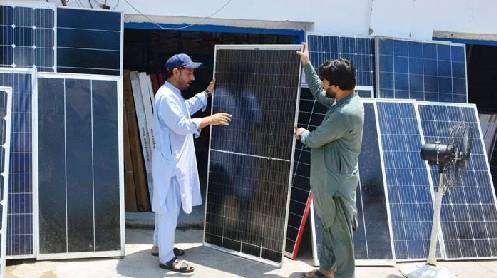
ISLAMABAD: Pakistan’s solar energy contribution to the national power mix remains significantly low at just 1.15 percent, far behind countries such as Brazil (14.9%), China (12.4%), and India (9.8%), according to a latest report by the Competition Commission of Pakistan (CCP).
Titled “Unlocking Green Potential: A Market Competition Study of Solar Energy in Pakistan 2026,” the report highlights structural challenges hindering the sector’s growth, including limited local manufacturing, inconsistent policies, and insufficient investment.
The CCP study identifies key market distortions and entry barriers, particularly Pakistan’s heavy reliance on imported solar equipment, weak certification and quality assurance mechanisms, and complex licensing requirements. In contrast, China’s global leadership is attributed to strong government backing and a fully integrated domestic supply chain, while India and Brazil have accelerated solar adoption through targeted incentives, tax benefits, and accessible financing.
Despite the low share, the report notes that Pakistan’s solar market is gradually expanding, driven by net metering, off-grid solutions, and increasing private sector participation. However, high upfront installation costs, extended payback periods, and limited financing options continue to restrict adoption, especially among households and small businesses.
Utility-scale solar projects also face challenges in competing with conventional energy sources, which benefit from established infrastructure and longstanding policy support. Additionally, outdated transmission and distribution systems limit grid flexibility, slowing integration of renewable energy and undermining investor confidence.
The report further raises concerns over low consumer awareness, influx of substandard imported equipment, and the absence of accredited testing laboratories—factors that have led to performance issues and safety risks, including fire incidents. Frequent policy shifts, particularly regarding net metering and import duties, along with delays in implementing reforms such as the Competitive Trading Bilateral Contract Market (CTBCM), have added to market uncertainty.
To address these challenges, the CCP recommends promoting local solar panel manufacturing, potentially aligned with broader industrial initiatives under CPEC, to reduce import dependence and build export capacity. It also stresses the need for modernizing grid infrastructure, expanding clean energy incentives to rural areas, facilitating solar investment through effective policy implementation, and promoting battery storage solutions.
The report also highlights an emerging environmental concern: the lack of solar panel recycling mechanisms. With panels typically lasting 25–30 years, Pakistan may soon face a growing waste management challenge. Globally, solar photovoltaic waste is projected to reach up to 78 million tons by 2050.
The CCP concludes that while Pakistan’s solar sector holds immense potential, sustained policy support, regulatory consistency, and infrastructure development are essential to unlock its full capacity and transition towards a sustainable energy future.
Story by Fawad Yousafzai