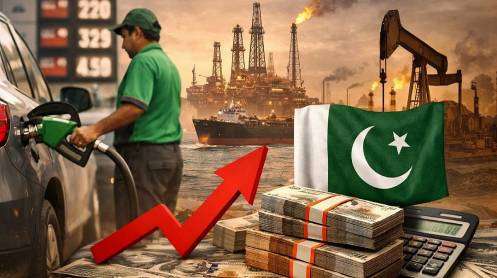
ISLAMABAD: A heated debate erupted in the National Assembly as opposition members strongly criticised the recent surge in petroleum prices, while the government defended the move as a necessary response to volatility in the international oil market.
The session began with opposition lawmaker Shahid Khattak calling for the suspension of the Question Hour to address the price hike. The demand received broad support across the House, leading to its suspension and a dedicated discussion on the issue.
Petroleum Minister Ali Pervaiz Malik informed lawmakers that global oil prices had surged significantly בעקבות the Middle East conflict, particularly after tensions involving the United States, Israel, and Iran. He stated that the government had absorbed the financial burden for nearly three weeks—amounting to Rs50–60 billion per week—before passing on the increase.
He emphasised that the decision to raise prices was made after consultations with provincial governments, alongside targeted subsidies for vulnerable segments. These subsidies, he said, are being distributed through digital wallets to motorcyclists, transporters, passengers, and farmers.
The minister noted that Pakistan relies on imports for 80–90% of its petroleum needs and that the ongoing conflict has disrupted global supply chains. To ensure uninterrupted supply, the government has adopted alternative import routes via ports in Saudi Arabia and the UAE, though higher insurance and transportation costs have added to the burden.
Finance Minister Muhammad Aurangzeb said the government had anticipated the crisis following regional tensions and had been taking pre-emptive measures for weeks. He added that over Rs100 billion had been spent to cushion consumers from price shocks.
Opposition leaders, however, remained unconvinced. PTI Chairman Barrister Gohar Ali Khan questioned why fuel prices in Pakistan were higher than in neighbouring countries, pointing out that India had reduced profit margins of petroleum companies to provide relief.
MQM’s Dr Farooq Sattar urged the government to abolish petroleum levies and expand the tax net instead of relying on indirect taxation. PPP’s Naveed Qamar stressed the need for greater parliamentary consultation on such critical decisions.
Other lawmakers, including Noor Alam Khan, Aminul Haque, and Mehtab Akbar Rashdi, also voiced concerns, warning that the rising fuel costs were placing an unbearable burden on the public.
Despite the criticism, the government maintained that while rising oil prices pose a serious challenge, there is no shortage of petroleum products in the country, and all necessary steps are being taken to ensure supply stability and protect consumers.
Story by Iftikhar A. Khan