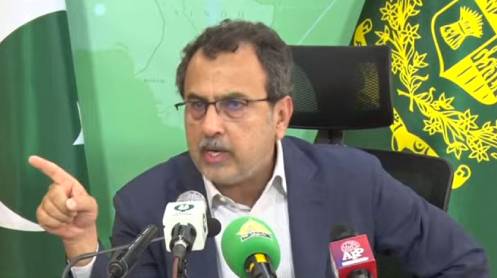
ISLAMABAD: Russia has offered to enhance cooperation with Pakistan in strengthening cyber protection of its energy sector infrastructure, amid rising global threats targeting critical utilities.
The proposal was formally conveyed by Russian Energy Minister Sergei Tsivilev in a letter addressed to Federal Minister for Power Sardar Awais Ahmad Khan Leghari.
The development reflects deepening engagement between Islamabad and Moscow, with both sides reaffirming their commitment to expanding cooperation across trade, energy, and business sectors, as well as social domains including health and education.
Bilateral ties have gained momentum since the 10th Pakistan-Russia Intergovernmental Commission held in November 2025, where multiple memoranda of understanding (MoUs) were signed covering quality standards, anti-monopoly regulation, and media collaboration.
Energy cooperation remains central to the relationship, with ongoing engagement in oil and gas, alongside emerging opportunities in LNG and LPG supply. Both countries have also identified potential collaboration in renewable energy, hydropower, and water management technologies, including hydrological monitoring and flood resilience—key priorities for Pakistan in addressing climate challenges.
In his communication, Tsivilev highlighted the increasing complexity of cyber threats facing the global energy sector, stressing the need for coordinated and proactive responses. He proposed the development of a comprehensive joint program aimed at assessing and strengthening the cyber resilience of Pakistan’s critical energy infrastructure.
To implement the initiative, Russia has recommended the involvement of Cyberus as an executing partner. The organization works closely with Russia’s Ministry of Energy and plays a key role in protecting the country’s fuel and energy systems, while also collaborating internationally on cyber resilience initiatives.
Under the proposed framework, both sides may establish a joint inter-agency working group comprising relevant government institutions and private stakeholders to design and implement cybersecurity measures.
Experts note that the collaboration comes at a crucial time for Pakistan, as the country accelerates digital transformation in its power sector through smart grids and advanced metering infrastructure. While these technologies enhance efficiency, they also increase exposure to cyber risks, underscoring the importance of robust security systems.
If materialized, the initiative could significantly bolster Pakistan’s energy security, improve system resilience against cyber threats, and further strengthen strategic ties between Islamabad and Moscow.
Story by Mushtaq Ghumman