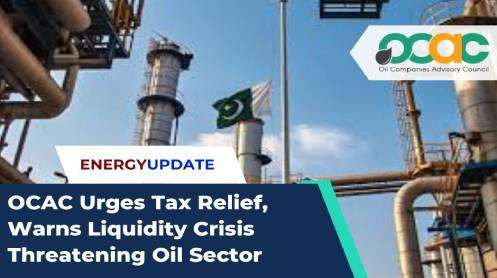
KARACHI: The Oil Companies Advisory Council (OCAC) has called on the government to introduce comprehensive fiscal and regulatory reforms in the FY2026–27 federal budget, cautioning that escalating taxes and severe liquidity constraints are putting the petroleum sector’s financial sustainability at risk.
In a letter addressed to Dr. Najeeb Memon of the Tax Policy Office at the Ministry of Finance, the council highlighted that several longstanding issues remain unresolved and have worsened due to an increasing tax burden, delayed refunds, and the disallowance of input tax adjustments following the sales tax exemption on petroleum products.
OCAC pointed out that petroleum prices and margins are strictly regulated by the government, leaving oil marketing companies (OMCs) with no room to pass additional tax costs onto consumers. “These measures are eroding profitability, limiting infrastructure investment, and weakening the sector’s overall financial health,” the council noted.
The council further explained that the Finance Act 2024, which exempted key petroleum products from sales tax, has resulted in the accumulation of non-adjustable input taxes exceeding Rs33 billion for tax year 2025, with the burden expected to grow in FY2026.
Additionally, more than Rs72 billion in input tax claims from the earlier zero-rated regime remain pending, intensifying liquidity pressures across the industry. OCAC warned that delays in settlements could lead to financial charges estimated between Rs7 billion and Rs7.2 billion.
Among its key recommendations, the council urged the government to restore the taxable status of petroleum products, expedite the settlement of accumulated input tax refunds with compensation for delays, and reduce the minimum tax on turnover from 0.5 percent to 0.25 percent, with a gradual phase-out.
It also proposed exempting LNG imports from minimum tax under Section 148, extending the carry-forward period for minimum tax from two to five years, and abolishing the super tax for the regulated petroleum sector.
Highlighting operational challenges, OCAC called for reforms in withholding tax mechanisms, the implementation of automated refund systems, and the elimination of discretionary powers that restrict input tax adjustments.
The council also emphasized the need for incentives to encourage investment in fuel storage and logistics infrastructure, along with tax relief measures for salaried employees to support workforce retention.
“The petroleum sector remains vital for Pakistan’s energy security and economic stability. However, the cumulative impact of turnover-based taxation, blocked liquidity, and rising compliance burdens is undermining its long-term sustainability,” the letter concluded.
Story by Tanveer Malik