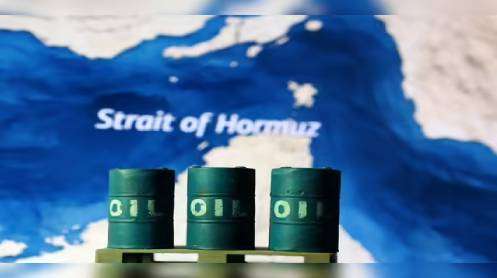
ISLAMABAD: Pakistan has initiated plans to establish Strategic Petroleum Reserves (SPR) aimed at securing up to 90 days of fuel coverage, as policymakers respond to growing concerns over potential supply disruptions linked to tensions around the Strait of Hormuz.
The move comes against the backdrop of renewed geopolitical instability involving the United States, Israel, and Iran, which has heightened fears of volatility in global energy markets. Officials view the situation as a stark reminder of Pakistan’s heavy reliance on imported petroleum and its vulnerability to external shocks.
Under the proposed plan, the government is considering imposing a Petroleum Development Levy (PDL) on petrol and diesel to finance the initiative. With annual fuel consumption estimated at around 20 billion litres, a levy of Rs10 per litre could generate approximately Rs200 billion annually. Over three years, this could mobilize nearly Rs600 billion (over $2 billion) to fund the construction of strategic storage facilities.
Currently, Pakistan maintains only 24 to 28 days of fuel reserves, primarily in the form of commercial stocks held by oil marketing companies. These are designed for routine supply operations and are insufficient to withstand major disruptions. In comparison, members of the International Energy Agency maintain reserves equivalent to 90 days of consumption, while India holds around 75 days and China up to 120 days.
To bridge this gap, the government has formed a high-level committee under the Petroleum Division on April 22, 2026, led by Petroleum Minister Ali Pervaiz Malik. The committee has been tasked with finalizing recommendations by May 8 for submission to top decision-making authorities.
The body includes representatives from key institutions such as the Oil and Gas Regulatory Authority (OGRA), National Crisis Management Cell, Joint Staff Headquarters, Pakistan State Oil, Inter State Gas Systems, and the Pakistan Institute of Development Economics. Private sector stakeholders, including Hub Power Company and other refinery and storage operators, are also contributing to the framework.
Officials emphasize that Pakistan’s dependence on imported crude oil and refined products significantly increases its exposure to global supply disruptions. The proposed SPR is being positioned as a national security measure to ensure fuel availability during crises such as geopolitical conflicts, maritime blockades, or sudden price shocks.
Policymakers are also evaluating international models, including offshore or third-country storage arrangements, where reserves are maintained in friendly oil-producing nations. Such approaches are already utilized by countries like Japan, India, South Korea, and China to reduce domestic storage costs while ensuring emergency access.
In parallel, the government is considering expanding commercial storage capacity from the current 24–28 days to 45–50 days to enhance routine supply resilience. Experts note that strategic reserves differ from commercial inventories as they are state-controlled and reserved strictly for emergency use, particularly during war-like situations or severe global disruptions.
The committee is reviewing past studies by international consultants along with recent local assessments to design a practical and cost-effective implementation plan. Officials admit that earlier recommendations on strategic storage were not fully executed, contributing to the current preparedness gap.
As deliberations continue, the SPR initiative is being described as a crucial step toward strengthening Pakistan’s long-term energy security, enabling the country to transition from short-term fuel management to a more resilient and strategically protected energy system.
Story by Khalid Mustafa