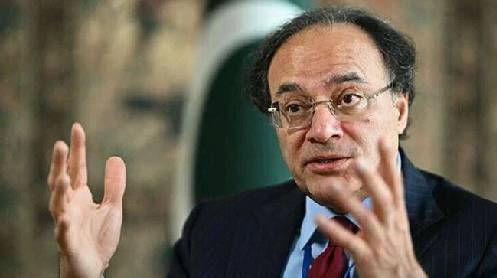
ISLAMABAD: Finance Minister Muhammad Aurangzeb on Tuesday said Pakistan possesses sufficient domestic fiscal capacity to confront the growing challenges of climate change, stressing that available local resources should be utilised efficiently before turning to international financial assistance.
Speaking at a session titled “Mobilising Climate Financing for Pakistan” during the Breathe Pakistan Climate Conference, the minister highlighted the importance of prudent financial management and coordinated national action to address climate-related vulnerabilities.
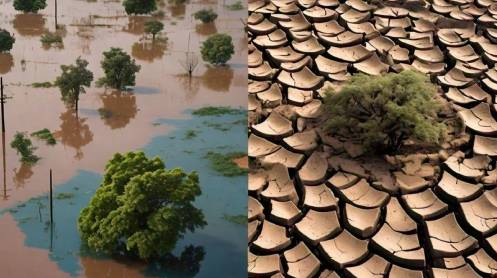
Referring to the catastrophic floods of 2022, Aurangzeb noted that the floods witnessed in 2025 were “even more intense and widespread”, affecting nearly the entire country and multiple river systems.
“Despite calls from some quarters to seek international assistance, the government chose not to immediately pursue external funding because there was fiscal buffer and fiscal space available,” he said. “We must first utilise the resources already at our disposal effectively and transparently.”
The finance minister remarked that the responsibility for advancing climate financing now largely rested with Pakistan itself, emphasising that maintaining macroeconomic stability was essential to unlock sustainable climate investments.
He further called for stronger collaboration among government ministries, including climate change and planning divisions, to ensure climate issues become an integral part of national policymaking rather than remaining limited to academic discourse.
“We need a whole-of-government approach to effectively address climate challenges,” Aurangzeb stated.
During the session, Adeel Abbas, Senior Climate Change Specialist and Regional Climate Lead at the World Bank Group, highlighted the widening global climate financing gap and stressed the need for collective international efforts.
Describing climate finance as an innovative mechanism, he said carbon finance and other structured financial instruments could help mobilise substantial resources.
“While Pakistan’s climate financing requirement is estimated at $6.3 billion, over $28 trillion was invested globally in long-term structured financing last year. The resources exist in the global economy,” Abbas noted.
Dr Murtaza Syed of the [Asian Infrastructure Investment Bank observed that macroeconomic vulnerabilities and fiscal risks continue to hinder developing countries’ access to climate finance.
“The global fight against climate change cannot succeed without emerging and developing economies,” he said, while also underlining the need for stronger domestic resource mobilisation.
Meanwhile, Zafar Masud, Chairman of the Pakistan Banks Association, urged Pakistan to formally declare a climate emergency and convert policy discussions into practical action.
He proposed establishing a specialised climate-focused bank and argued that funding availability was not the core issue.
“There is no shortage of financing locally or internationally. The real challenge is awareness and mindset. People must understand how climate change directly affects their lives,” Masud said.
Anouj Mehta of the Asian Development Bank highlighted affordability concerns surrounding green bonds and cited examples from Thailand and Uruguay as successful models for climate financing mechanisms.
Story by Kalbe Ali