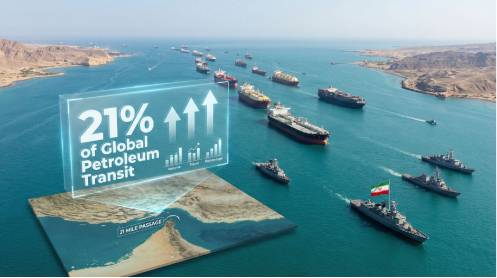
ISLAMABAD: Amid global energy disruptions triggered by the closure of the Strait of Hormuz, the Energy Transitions Commission (ETC) has cautioned governments against expanding fossil fuel infrastructure, urging instead a rapid transition toward renewable energy to strengthen resilience against future geopolitical shocks.
Thank you for reading this post, don't forget to subscribe!In its latest study, the ETC — a coalition of global energy leaders committed to achieving net-zero emissions by 2050 — argued that fossil fuel-based energy systems are highly vulnerable to supply disruptions because they depend on continuous commodity flows through critical chokepoints such as the Strait of Hormuz.
“Fossil systems rely on continuous commodity flows through concentrated chokepoints, meaning disruptions are rapidly transmitted through global prices. By contrast, 70–90 percent of clean energy costs are upfront capital investments,” the report stated.
The commission highlighted Pakistan as a key example, noting that the country’s rapid rooftop solar expansion helped cushion the economy from the worst impacts of the Hormuz crisis. According to recent research cited in the report, rooftop solarisation in Pakistan has saved nearly $12 billion since 2020 by significantly reducing gas demand.
The ETC stressed that accelerating clean energy deployment is not only essential for climate goals but also a strategic economic response to volatile fossil fuel markets. It warned that expanding oil, gas, and coal infrastructure today could lock countries into future energy shocks and higher costs.
The report estimated that technologies such as solar power, electric vehicles (EVs), and heat pumps could cut global oil demand by nearly 25 percent by 2035. It noted that EV adoption alone could reduce oil consumption by around five million barrels per day by 2030 and up to 10 million barrels daily by 2035 — equivalent to nearly half of pre-crisis oil flows through Hormuz.
At the same time, the ETC warned that elevated fossil fuel prices could increase annual global oil and gas spending by $1–2 trillion without delivering additional energy supply. This amount, the report said, is comparable to the estimated $1.5 trillion annual clean energy investment gap needed to build a resilient net-zero energy system by 2050.
The commission urged governments worldwide to accelerate renewable electricity deployment, electrify transport, heating and cooking systems, scale up green fuels and fertilisers, and improve energy efficiency to reduce dependence on imported fossil fuels.
“The current crisis shows fossil fuel dependence is not only a climate risk, but also an economic and strategic vulnerability. Clean energy systems are more distributed, more efficient, and less exposed to the price shocks created by continuous dependence on traded fuels,” said Adair Turner, co-chair of the ETC.
While acknowledging the burden of rising fuel prices on vulnerable populations, the report advised governments to provide targeted support rather than blanket fossil fuel subsidies. It also cautioned against approving new coal projects, long-term LNG dependency, large-scale oil and gas expansion, and weakening carbon pricing mechanisms.
The ETC further cited analysis by energy think tank Ember, which found that renewable technologies and battery storage systems have become increasingly affordable and scalable since 2022, making them central to long-term energy security strategies.
According to the report, global renewable energy capacity is expected to expand by nearly 4,600 gigawatts by 2030 — almost double current levels — with solar photovoltaic (PV) technology accounting for nearly 80 percent of this projected growth.
Story by Zaki Abbas