ISLAMABAD: Experts at a high-level roundtable on Monday warned that the ongoing US-Iran conflict has triggered far-reaching geopolitical and economic shocks, urging Pakistan to urgently reset its energy, fiscal and strategic planning frameworks to cope with rising global uncertainty.
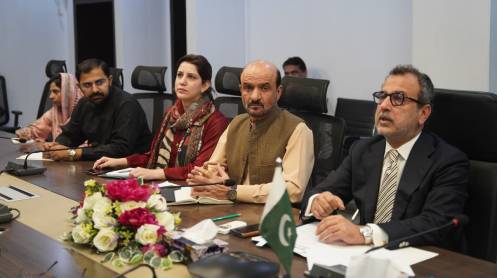
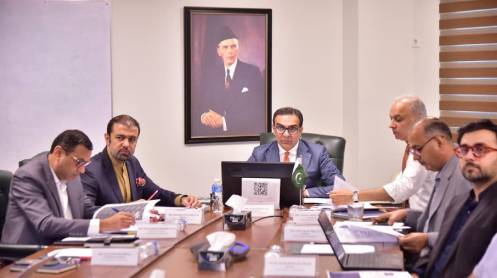
Thank you for reading this post, don't forget to subscribe!The discussion took place at a roundtable titled “Dynamics of Iran Conflict: Implications and Choices”, organised by the Sustainable Development Policy Institute (SDPI), according to a press release.
Speakers stressed that Pakistan must accelerate its transition toward renewable energy, strengthen economic resilience, diversify imports and adopt targeted social protection measures to cushion the impact of rising inflation and energy price volatility.
Opening the session, SDPI Executive Director Dr Abid Qaiyum Suleri said the rapidly evolving Middle East crisis has disrupted global energy systems, investment flows, aviation routes and defence alignments. He noted that efforts worldwide to reduce dependence on imported oil are gaining momentum, while the Gulf’s traditional role as a stable investment hub is being reassessed.
Dr Suleri cautioned that the global energy crisis remains unresolved, warning that declining inventories could trigger further spikes in oil prices. He emphasised that renewable energy transition is the only sustainable long-term solution.
In his keynote address, Senator Mushahid Hussain Sayed described the US-Iran conflict as one of the most significant geopolitical shifts since the Suez Crisis of 1956, saying it has reshaped global alliances and exposed divisions within Western and regional blocs, including NATO and the Gulf Cooperation Council.
He said Pakistan’s strategic relevance has increased due to its balanced relations with major global players, adding that the country should focus on economic recovery, regional connectivity and stronger partnerships, particularly with China. He also called for revival of the Iran–Pakistan gas pipeline project to secure affordable and stable energy supplies.
SDPI Senior Advisor Emeritus Dr Ehsan Mehmood Khan said the conflict reflects long-standing geopolitical tensions in the Middle East and has significantly altered global security dynamics. He said both Iran and its adversaries have pursued strategic objectives that have intensified regional instability, with global economic consequences extending beyond the conflict zone.
He noted that despite heavy losses, Iran has shown resilience, while the broader war has created economic shocks worldwide. He also highlighted Pakistan’s historical diplomatic role, citing engagements such as the Gwadar development, the 1963 Pakistan–China border agreement, and facilitation of US–China rapprochement in the 1970s.
SDPI Deputy Executive Director (Research) Dr Sajid Amin Javed warned that the conflict has evolved into an energy, food and financial crisis with long-term implications for developing economies. He said Pakistan’s recent macroeconomic stabilisation is under renewed pressure due to inflation, external vulnerabilities and energy uncertainty.
He estimated that inflation could rise to 11–13%, nearly double official targets, while Pakistan’s oil import bill could increase by $6.2 billion to $11 billion under a conservative scenario. He added that GDP growth could slow by up to one percentage point due to higher fuel costs and industrial gas shortages.
Dr Javed said Asia remains highly vulnerable, as nearly 70% of its oil and gas passes through the Strait of Hormuz. He warned that Pakistan’s dependence on imported LNG and limited fiscal space increases exposure to prolonged instability.
He called for stronger social protection, improved inflation communication by the central bank, better enforcement of price controls, and a redesigned federal budget to protect vulnerable groups, including salaried workers and low-income households. He also stressed long-term investment in renewable energy to reduce reliance on imported fuels.
During the discussion, participants suggested expanding cash transfer programmes, improving monetary policy communication to manage inflation expectations, and revising income tax slabs for the salaried class to ease pressure on the middle income group.
Senator Mushahid Hussain said Pakistan must shed what he termed an “intellectual inferiority complex” and recognise its strategic importance in a shifting multipolar world. He added that the country should utilise the next few years to stabilise its economy and strengthen its position under more favourable global conditions.