KARACHI: The Parliamentary Forum on Energy and Economy on Thursday cautioned that sharp increases in the Petroleum Development Levy (PDL) are intensifying inflationary pressures, disproportionately impacting low-income households and exposing long-standing weaknesses in Pakistan’s energy and fiscal management, particularly amid recent regional tensions in the Persian Gulf.
The forum said the petroleum levy should not be used as a primary revenue-generation tool or as a substitute for broader fiscal reforms.
Speaking at a high-level policy briefing, members noted that Pakistan’s heavy dependence on imported fossil fuels has left the economy highly vulnerable to external shocks. They pointed out that disruptions in the Strait of Hormuz have further highlighted this fragility, with nearly 70% of Pakistan’s oil imports sourced from Gulf countries and limited strategic reserves available to cushion supply risks.
Nafisa Shah, co-convener of the forum, said the crisis reflects decades of policy shortcomings rather than only external shocks. She stressed the need for a transition toward a “sovereign, resilient and just energy system,” warning against continued reliance on reactive policy measures.
Parliamentary Secretary for Information and Broadcasting Danyal Chaudhry emphasised the importance of transparency in fuel pricing and reforms, stating that unclear communication during economic stress undermines public trust and institutional confidence.
Forum co-convener Sher Ali Arbab said the findings would be compiled into a detailed report for the government, warning that excessive reliance on the PDL risks slowing economic recovery. He noted that energy price increases should have followed global trends rather than being driven by domestic revenue needs.
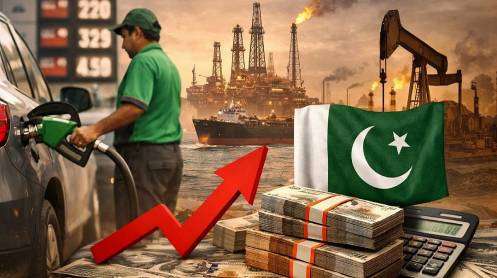
The briefing highlighted that domestic fuel prices have surged by more than 50% from pre-crisis levels, at one point exceeding Rs458 per litre. Experts said the escalation was driven largely by repeated increases in the PDL, which now stands at around Rs117.41 per litre.
Economists at the session said the levy has increasingly been used to manage fiscal deficits, noting that unlike GST—shared with provinces under the National Finance Commission Award—the PDL is treated as non-tax revenue, allowing the federal government to retain full proceeds. This, they warned, weakens fiscal federalism and reduces provincial fiscal space.
Policy Research Institute for Equitable Development (PRIED) CEO Muhammad Badar Alam described the levy as regressive, arguing that it disproportionately burdens lower-income groups who spend a larger share of income on fuel and transport.
PPP MNA Khursheed Junejo highlighted the impact of rising diesel and fuel costs on agriculture, warning that increased input prices are discouraging cultivation and affecting rural livelihoods.
Experts also pointed to deeper structural challenges, including declining domestic oil production, underutilised energy infrastructure, rising circular debt exceeding Rs3.2 trillion, and continued reliance on imported energy despite local resource potential.
Oil and gas consultant Sikandar Memon called for reducing import dependency and improving infrastructure efficiency, while former adviser to the Ministry of Finance Khaqan Hassan Najeeb said Pakistan’s energy insecurity has become a broader macroeconomic risk. He urged a shift toward indigenous, integrated energy solutions and improved logistics, including greater reliance on rail freight for goods transport.