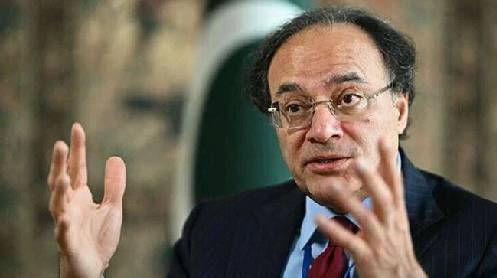
ISLAMABAD: Finance Minister Muhammad Aurangzeb will present Pakistan’s Federal Budget for fiscal year 2026-27 in the National Assembly on June 12, according to Adviser to the Finance Minister Khurram Schehzad.
Sharing the revised schedule on social media platform X, Schehzad also announced that the Pakistan Economic Survey 2025-26 will be released by the finance minister at 2:20 pm on Thursday, providing a comprehensive review of the country’s economic performance during the outgoing fiscal year.
The budget sessions of both the National Assembly and Senate have already been summoned by President Asif Ali Zardari, paving the way for the presentation and debate of the government’s fiscal plans.
Ahead of the budget announcement, the National Economic Council (NEC), the country’s highest economic policymaking forum, met under the chairmanship of Prime Minister Shehbaz Sharif to finalize federal and provincial development programmes. Addressing the meeting, the prime minister emphasized that extensive consultations had been held with the provinces and that all decisions were taken in Pakistan’s best interest.
The NEC meeting took place after three postponements, largely due to negotiations over provincial shares under the National Finance Commission (NFC) Award. Discussions centered on the federal government’s request for additional fiscal space to meet strategic expenditure requirements.
According to sources, the federal government, provincial administrations, and coalition partners have agreed on a broad fiscal framework aimed at addressing a significant revenue shortfall while creating additional resources for strategic priorities in the coming year. The agreement includes expenditure rationalization across all levels of government and the freezing of provincial shares from the federal divisible pool at the current fiscal year’s level.
Under the proposed arrangement, any increase in Federal Board of Revenue (FBR) collections beyond the current year’s revenue base would be retained by the federal government. Officials estimate that the additional fiscal space generated could range between Rs1.3 trillion and Rs1.7 trillion, depending on revenue performance. However, Balochistan and Khyber Pakhtunkhwa have reportedly not yet endorsed the arrangement.
Operating under the oversight of the International Monetary Fund (IMF), the government has adjusted development allocations across several sectors while maintaining a record national development programme worth Rs4.715 trillion. The development portfolio includes provincial Annual Development Programmes (ADPs) totaling Rs3.138 trillion, the federal Public Sector Development Programme (PSDP) of Rs1.126 trillion, and Rs451 billion in investments by state-owned enterprises (SOEs).
Prime Minister Shehbaz Sharif has reiterated the government’s commitment to broadening the tax base and documenting the informal economy. As part of these efforts, the government recently introduced the Fixed Tax Asaan Scheme aimed at bringing small traders and shopkeepers with annual turnovers of up to Rs200 million into the tax net.
Meanwhile, officials are also considering easing remittance-related restrictions in the upcoming budget to facilitate overseas Pakistanis seeking greater flexibility in managing their investments and financial assets abroad.
The FY2026-27 budget is expected to outline the government’s strategy for fiscal consolidation, economic growth, infrastructure development, and revenue mobilization amid continuing IMF-supported reforms.