China has successfully completed and commissioned the Guohua Rudong integrated solar-hydrogen-storage project in Jiangsu province, marking a major milestone in its push to combine large-scale renewable energy with battery storage and green hydrogen production.
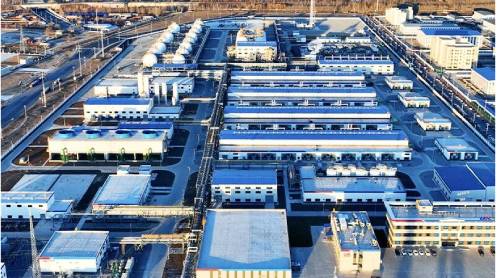
Thank you for reading this post, don't forget to subscribe!Developed by China Energy Investment Corporation (CHN Energy), the facility is located in the Yudong reclaimed tidal-flat area near Yangkou Port in Rudong county, Nantong. The company describes it as the country’s largest integrated project of its kind, combining solar generation, energy storage, hydrogen production and end-use applications.
The project features a 400 MW coastal solar photovoltaic (PV) plant, a 60 MW / 120 MWh battery energy storage system, and a green hydrogen production unit with a capacity of 1,500 Nm³ per hour. It also includes a 220 kV shore-based substation and hydrogen refuelling infrastructure capable of supplying up to 500 kg per day.
According to CHN Energy, the solar facility is expected to generate around 468 GWh of electricity annually—enough to power nearly 200,000 households. The hydrogen production unit is designed to produce approximately 482 tons of high-purity green hydrogen each year.
The PV component achieved full grid connection on April 29, 2025, while the integrated project reached completion on June 10, 2026, following system-wide commissioning that confirmed performance targets were met. The hydrogen production facility is currently in its final testing phase and is expected to become fully operational by August 2026.
A dedicated submarine cable directly links the solar plant with the hydrogen facility, allowing surplus electricity to bypass the public grid and directly power electrolysers during peak generation periods. At full output, only a fraction of the plant’s generation is required to operate the hydrogen system at maximum capacity.
The battery storage system plays a key role in stabilising solar output fluctuations and ensuring a continuous power supply for hydrogen production, improving overall efficiency and renewable energy utilisation.
The project also integrates environmental restoration work across approximately 4.3 square kilometres of coastal wetlands, alongside the 2.9 square kilometre development footprint, including measures to control invasive species and restore tidal ecosystems.
As part of China’s large-scale renewable energy expansion programme, the project is being positioned as a demonstration model for coastal solar development combined with hydrogen production and storage, showcasing a fully integrated clean energy ecosystem.
Story by by Vincent Shaw