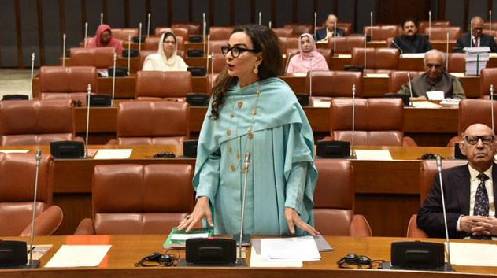
ISLAMABAD: Senate Standing Committee on Climate Change and Environmental Coordination Chairperson Senator Sherry Rehman on Thursday expressed serious concern over what she described as “shocking” reductions in climate-related budget allocations, warning that Pakistan is becoming increasingly vulnerable to worsening environmental and climate-related shocks.
Chairing a committee meeting, Rehman said the country is already experiencing intensifying heatwaves, rapid glacier melt, irregular rainfall patterns, growing water scarcity, and deteriorating urban environmental conditions. She stressed that monsoon preparedness must remain an urgent national priority, calling for stronger institutional coordination to address what she termed a growing “climate polycrisis.”
The committee noted concern over declining financial allocations for the Climate Ministry, with its Public Sector Development Programme (PSDP) funding reduced to Rs2.478 billion, down from Rs3.5 billion in the previous fiscal year.
“Climate risks are increasing, not decreasing, yet allocations continue to shrink,” Rehman remarked, also highlighting the ministry’s limited capacity to fully utilise available funds.
She further questioned the rationale behind proposed parallel institutions, including the Climate Authority, asking what additional functions it would serve beyond the existing ministry. She cautioned against bureaucratic duplication that could increase financial burden without improving outcomes.
The committee also reviewed broader fiscal pressures, citing official figures showing losses of state-owned enterprises at Rs832.848 billion in FY2025, with cumulative losses exceeding Rs6.5 trillion. An additional Rs451 billion has reportedly been allocated to these entities in the current budget.
Briefing the committee on monsoon preparedness, the National Disaster Management Authority (NDMA) and the Capital Development Authority (CDA) provided updates on anticipated seasonal risks.
NDMA Chairman Inam Haider Malik informed lawmakers that the 2026–27 period is expected to be influenced by El Niño conditions, likely intensifying extreme weather patterns across the region. He noted that global temperatures in June 2026 were about 1.47°C above historical averages, while Pakistan’s temperatures were 1.56°C above baseline levels, indicating an accelerating climate trend.
Rehman warned that climate thresholds previously expected later in the decade are being reached earlier than projected, raising concerns about long-term water security as glacier melt accelerates and reservoir supplies come under pressure.
Story by Jamal Shahid