LAHORE: Pakistan’s economy is facing mounting pressure from a prolonged global energy price shock that has slowed economic growth, accelerated inflation, widened external imbalances, and increased poverty, according to a new quarterly report released by the Modelling Lab of the Innovation and Technology Centre at the Lahore School of Economics (LSE).
The report, covering the fourth quarter of FY2025-26, was prepared by Dr. Moazam Mahmood, Professor of Economics; Dr. Azam Amjad Chaudhry, Dean of the Faculty of Economics; Amna Noor Fatima, Manager and Data Analyst at the Modelling Lab; and data analysts Anodha Liaquat and Syeda Khadeeja Batool.
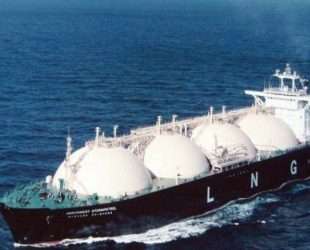
Pakistan, which imports nearly 500,000 barrels of oil per day, has been severely impacted by international crude prices remaining US$25-30 per barrel above their long-term average over the past three months. The report notes that the higher energy costs have affected virtually every major macroeconomic indicator.
Independent economists now estimate Pakistan’s GDP growth for FY2025-26 at 3.1%, significantly below the government’s target of 3.7%. Earlier forecasts by the IMF and the Asian Development Bank projected growth at 3.6% and 3.5%, respectively, before the full impact of the global energy shock became evident. Analysts warn that once complete fiscal-year data is incorporated, economic growth could slow further to 2.8%.
With Pakistan’s annual oil import bill already standing at approximately US$13 billion, elevated oil prices for just one quarter are estimated to add nearly US$1 billion to the country’s import costs.
The report highlights increasing pressure on Pakistan’s external accounts. Monthly exports average around US$3.5 billion, while imports remain close to US$7 billion, pushing the current account back into deficit. Imports surged to US$7.6 billion in April, a trend expected to continue through the end of the fiscal year. Although overseas remittances remain an important source of foreign exchange, the report emphasizes that they cannot compensate for the country’s structural economic weaknesses.
The authors argue that Pakistan’s most pressing economic challenge is no longer simply boosting growth, but reducing its dependence on imported energy. They stress that accelerating energy substitution through domestic and renewable energy sources is essential for achieving sustainable economic growth.
Despite the challenges, the report identifies encouraging developments in several sectors.
Agriculture has shown a strong recovery following the government’s decision to restore the wheat support price in 2026, reversing the negative impact of abandoning the long-standing price support mechanism over the previous two years.
Large-scale manufacturing has also rebounded after two difficult years. Following stagnation in FY2023-24 and contraction in FY2024-25, the sector recorded 6% growth during the second and third quarters of FY2025-26, largely driven by the automotive industry. However, analysts caution that broader industrial recovery has yet to take hold.
Similarly, the services sector improved, expanding by 3.7% after recording near-zero growth in FY2023-24 and only 1.4% growth the following year.
The energy shock has also intensified inflationary pressures. The report estimates average inflation for FY2025-26 at approximately 9%, substantially above the IMF’s April forecast of 7.2% and the government’s projection of below 6%.
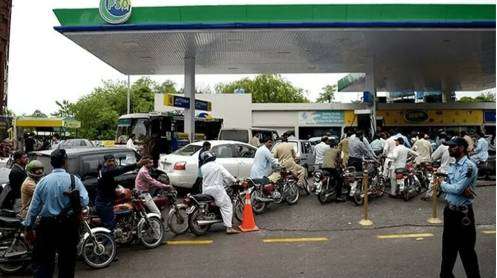
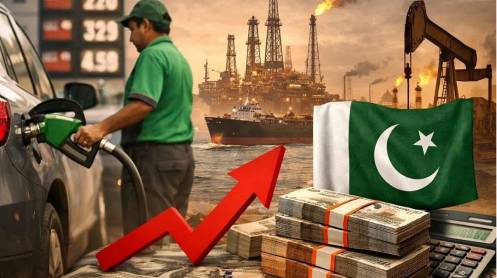
Energy prices have risen sharply over the past year. Petrol prices increased by 54%, kerosene by 85%, high-speed diesel by 53%, electricity tariffs by 25%, coal prices by 8%, and natural gas prices by an unprecedented 126%.
According to the report, these increases translated into an average consumer energy price rise of 8.9%, contributing approximately 4.6 percentage points to overall inflation.
The study further notes that consumers have been affected by both rising international energy prices and higher domestic taxation. More than one-third of the increase in energy prices resulted from supplier price adjustments, while nearly two-thirds reflected higher government taxes, making fiscal policy responsible for roughly one-third of the overall inflation rate.
Nevertheless, the report acknowledges the government’s success in stabilizing the exchange rate and bringing down double-digit inflation. The researchers note that severe inflation during recent years was largely driven by sharp currency depreciation, including a 25% decline in FY2018-19 and a 40% depreciation in FY2022-23. By preventing further major depreciation over the past two years, the government has helped contain inflation despite elevated global energy prices.
The report concludes that exchange rate stability has delivered important economic benefits by reducing inflationary pressures and protecting household purchasing power.
However, one of the report’s most concerning findings relates to poverty. The Lahore School’s Modelling Lab estimates that extreme caloric poverty, which had fallen steadily for nearly two decades and reached 4.5% by FY2014-15, increased dramatically from 16.5% in FY2018-19 to 21.1% in FY2024-25.
Researchers attribute this reversal primarily to slower economic growth and high inflation caused by repeated currency depreciation in recent years.
While stabilizing inflation marks an important achievement, the report concludes that Pakistan’s greatest economic challenge remains restoring sustained GDP growth at levels capable of significantly reducing poverty and improving household welfare.
Story by Hassan Abbas