Qaiser Sheikh presents a compelling case for placing energy at the heart of Pakistan’s economic revival; conference provides private sector with an opportunity to present its recommendations for accelerating Pakistan’s renewable-energy transition
Report by Energy Update
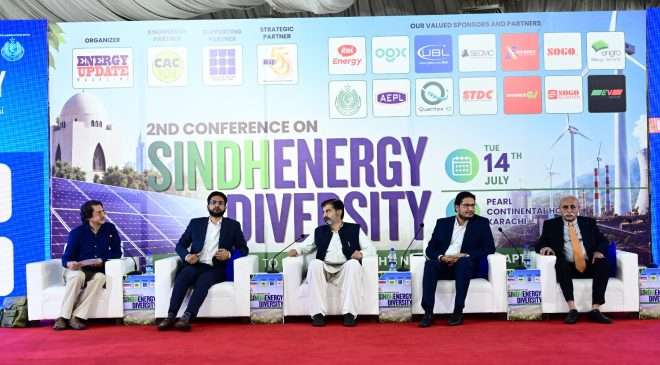
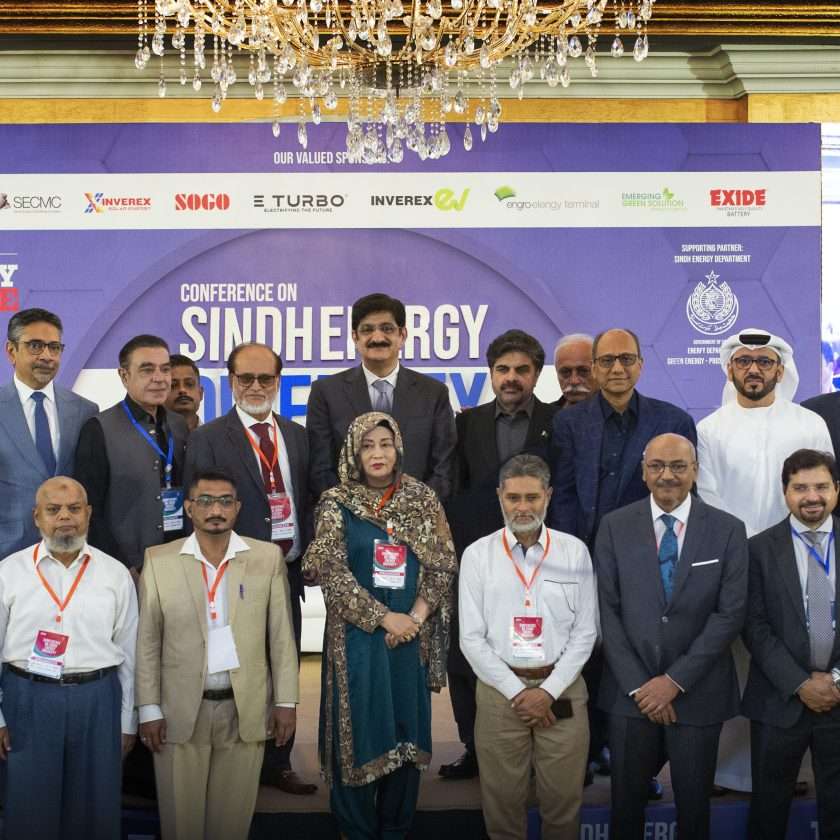
The 2nd Sindh Energy Diversity Conference 2026, organised by Energy Update magazine with the theme “From Resources to Resilience: Sindh’s Next Energy Chapter”, brought together policymakers, investors, industrialists, energy experts and business leaders, who deliberated on one of Pakistan’s most pressing national priorities – developing a diversified, secure and sustainable energy future. Held in Karachi, the conference reinforced the growing recognition that Sindh, endowed with abundant reserves of conventional and renewable energy resources, occupies a pivotal position in determining Pakistan’s long-term economic trajectory.
The inaugural session was addressed by Federal Minister for Investment Qaiser Ahmed Sheikh, who presented a compelling case for placing energy at the heart of Pakistan’s economic revival. Speaking from the perspective of an industrialist as well as a policymaker, he observed that one of the most significant challenges confronting the country’s manufacturing sector is the inconsistent availability and high cost of electricity. Without affordable and uninterrupted energy, he argued, industries are struggling to compete in international markets, limiting exports and widening the country’s trade deficit.
The minister maintained that improving energy affordability would substantially enhance industrial efficiency and allow Pakistani manufacturers to compete more effectively with regional and global competitors. He described reliable energy not simply as a utility but as a strategic production input capable of determining the success or failure of industries. According to him, reducing energy costs would directly contribute to higher exports, increased industrial output and greater investor confidence.
Mr Sheikh also highlighted Sindh’s exceptional position within Pakistan’s energy landscape. Rich in conventional resources such as natural gas and the vast Thar coal deposits, while simultaneously possessing immense wind and solar potential, the province offers an energy mix unmatched elsewhere in the country. He noted that the effective utilisation of these indigenous resources could significantly reduce Pakistan’s dependence on imported fuels, improve energy security and strengthen the national economy.
Sindh Governor Syed Muhammad Nehal Hashmi described the province’s diversified energy resources as one of Pakistan’s greatest strategic assets and stressed that their effective utilisation would play a decisive role in ensuring national energy security and sustainable economic development. The governor emphasised that renewable energy, particularly solar and wind power, offers Pakistan the most sustainable solution to its future electricity requirements.
However, he argued that the country’s clean-energy ambitions should extend beyond merely importing technology. Pakistan, he suggested, must gradually establish domestic manufacturing capabilities for solar panels, wind turbines, battery storage systems and other renewable-energy equipment. Such an approach would not only reduce dependence on imports but would also stimulate industrial growth, generate employment and encourage technological innovation.
Governor Hashmi observed that greater public and private investment in environmentally friendly energy projects would strengthen the national economy while supporting Pakistan’s commitments to climate resilience. Recognising the importance of knowledge sharing, the governor also commended Energy Update for consistently providing a credible platform where government, industry and academia can exchange ideas and contribute towards evidence-based policymaking.
Sindh Energy Secretary Shahab Qamar Ansari outlined the remarkable progress achieved in harnessing indigenous resources while acknowledging that several challenges still require attention. He noted that although Sindh possesses enormous renewable-energy potential, relatively modest electricity demand has slowed the development of additional large-scale renewable projects. Nevertheless, he reaffirmed the provincial government’s commitment to accelerating investment in both conventional and clean-energy resources.
Mr Ansari described the development of the Thar coalfields under the public-private partnership framework as one of Sindh’s landmark achievements. The establishment of mine-mouth power plants, together with the continued expansion of mining operations, has demonstrated the province’s determination to reduce Pakistan’s dependence on imported fuel. He informed participants that the Sindh government is also supporting the construction of a dedicated railway network to transport indigenous coal efficiently from Thar to power plants located in other parts of the country, thereby reducing transportation costs and improving energy logistics.
The conference also provided the private sector with an opportunity to present its recommendations for accelerating Pakistan’s renewable-energy transition.
Zakir Ali, Chief Executive Officer of Inverex Solar Energy, emphasised that although public interest in rooftop solar systems had increased dramatically, affordability remained a significant barrier for many households. He urged both federal and provincial governments to introduce accessible financing mechanisms that would enable low- and middle-income families to install solar systems through affordable bank loans and other innovative financing arrangements.
In his welcome address, Muhammad Naeem Qureshi, Chairman of the Sindh Energy Diversity Conference, explained that the annual event was conceived to showcase Sindh’s vast yet underutilised energy resources while creating a meaningful platform for dialogue among policymakers, investors, regulators and industry leaders. He observed that Pakistan possesses abundant indigenous resources capable of significantly reducing reliance on imported fossil fuels, provided they are developed through consistent policies, investor-friendly regulations and long-term planning.
Representing the Sindh Mass Transit Authority, Bashir Hussain informed participants that Sindh had become the first province in Pakistan to introduce electric bus services. He revealed that the provincial government intends to expand the fleet further through public-private partnerships while establishing additional charging infrastructure at strategic locations across Karachi. He also highlighted an innovative initiative under which electric scooters are being provided to working women and female students after appropriate training and licensing.
Joining the discussion through a live video link from Islamabad, a representative of the National Energy Efficiency and Conservation Authority (NEECA) disclosed that 222 electric vehicle charging stations have already been registered across major cities and along Pakistan’s motorway network. They noted that numerous additional applications are currently under review and pointed to the government’s decision to reduce electricity tariffs for charging stations as a significant incentive for private investment in the sector.
The need for supportive infrastructure was further reinforced by Malik Khuda Baksh, a prominent businessman, who urged electricity distribution companies to expedite the provision of new power connections for entrepreneurs seeking to establish EV charging facilities. He praised NEECA for simplifying licensing procedures and suggested that distribution companies should adopt a similarly efficient approach to facilitate the rapid expansion of the country’s electric mobility network. Supporting this view, Abu Bakar Ismail of K-Electric assured investors that Karachi’s existing electricity infrastructure is well-positioned to accommodate future growth in EV charging facilities.
Rashid Azeem, Head of Sustainability, ESG and Climate Risk at United Bank Limited (UBL), said the bank’s financial services would play a pivotal role in enabling the widespread adoption of electric vehicles across Pakistan. He told the audience that the bank had been offering affordable financing facilities to middle-income families to enable them to purchase electric vehicles, helping reduce their daily commuting costs.
He said UBL was fully prepared to partner with the federal and provincial governments in implementing loan and subsidy schemes aimed at accelerating the adoption of electric cars and electric motorcycles across Pakistan.
Khalique Jafrani, Chairman of the SOGO Group, said Pakistan offered enormous growth potential for electric two-wheelers, describing them as a cost-effective alternative to conventional motorcycles. He urged the government to introduce a comprehensive package of incentives to encourage local manufacturers to indigenously produce key electric vehicle components, thereby strengthening the domestic EV industry and reducing reliance on imports. He urged the authorities to ensure seamless facilitation for Chinese experts and prospective investors visiting Karachi to establish partnerships with local industries and promote investment and technology transfer.
Syed Kumail Raza, National Sales Manager at itel-Energy, said solar power offered the quickest, most cost-effective, and environmentally sustainable solution to bridge Sindh’s electricity shortfall of around 1,044 megawatts. He said advanced battery energy storage systems could ensure the uninterrupted availability of solar-generated electricity, enabling a round-the-clock power supply to homes and businesses. He added that itel-Energy offered a comprehensive range of solar products and energy storage solutions for residential, commercial, industrial and off-grid consumers, particularly in remote rural areas lacking access to the national grid. He reaffirmed the company’s support for the Sindh government’s drive to expand solar energy use, improve energy access for underprivileged communities, and address the province’s electricity deficit.
Mutahir ul Islam, Director of Operations at QuantexIQ, highlighted the startup’s digital solutions for monitoring and managing the entire LPG supply chain, from producers to end-users. He said the company’s IT-enabled dashboards and smartphone applications provided real-time tracking of LPG distribution, helping prevent leakages, improve operational safety, and minimise financial losses. He added that one of the key challenges addressed by the system was the monetary loss caused by residual gas left in cylinders returned by consumers, enabling LPG companies to improve operational efficiency and revenue recovery.